Why Are Rwanda Safaris Expensive?
Why Are Rwanda Safaris Expensive? If you have spent any time researching a safari to Rwanda, you will have noticed the number that stops most people mid-scroll: USD 1,500 per person for a single gorilla trekking permit. That is one permit. One morning. One hour. Before accommodation, flights, transport, food, or any other experience in the country is added to the bill. For many travelers, this figure triggers an immediate comparison with Uganda where the same gorilla permit costs USD 800, and the question that follows is reasonable: what exactly are you paying for in Rwanda that you are not paying for in Uganda?
Rwanda’s safari pricing reflects a deliberate national strategy about the kind of tourism the country wants, the conservation model it has committed to, and the positioning it has earned in the global luxury travel market.
Understanding those layers does not make Rwanda cheap. But it does make the price make sense, and for many travelers that understanding shifts the experience from feeling expensive to feeling worthwhile.
The Gorilla Permit:
The USD 1,500 gorilla trekking permit issued by Rwanda’s Development Board is the most expensive wildlife permit in Africa and the foundational cost that shapes every Rwanda safari budget.
It applies uniformly to international visitors regardless of the time of year or which operator books it. There are no seasonal discounts and no reductions for longer stays. East African residents pay USD 500 and Rwandan nationals pay USD 200, but for international travelers the rate is fixed and non-negotiable.
The permit covers entry into Volcanoes National Park, the ranger guides who accompany every trek, one hour with a habituated gorilla family, and a gorilla trekking certificate. It also funds daily field tracking teams that locate gorilla families before visitors arrive each morning, the conservation research programmes that monitor gorilla health and population dynamics, anti-poaching ranger patrols, and community development projects in the buffer zones surrounding the park. When the Rwanda Development Board introduced the USD 1,500 rate in 2017, having raised it from USD 750, the expressed rationale was clear: price as a conservation tool. Fewer visitors generating more revenue creates less physical stress on the gorilla families while maintaining or increasing the financial returns that fund their protection.
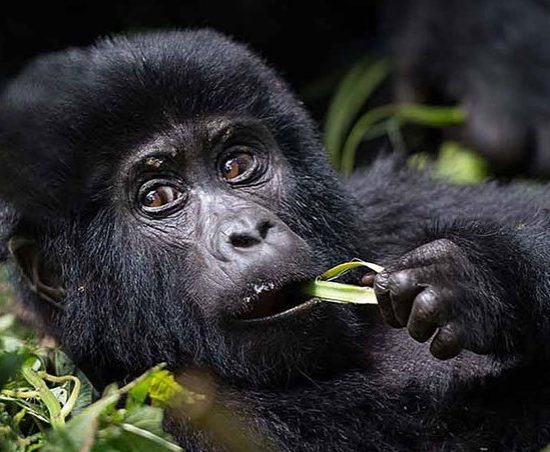
In practical terms this means that Volcanoes National Park limits daily trekking to 112 permits across fourteen habituated gorilla families, with a strict maximum of eight visitors per family per day. This cap is far lower than what visitor demand would otherwise produce and far lower than the permit numbers Uganda issues across Bwindi’s nineteen habituated families. The scarcity is deliberate. It is conservation policy expressed as pricing policy, and it works: Rwanda’s gorilla population has grown steadily under this model.
The High-Value Low-Impact Tourism Model
Rwanda’s overall safari pricing cannot be understood without understanding the national tourism philosophy it reflects. After the 1994 genocide, Rwanda rebuilt its economy with extraordinary deliberateness, and tourism became central to that rebuilding. The government made a strategic choice that has shaped every subsequent decision: Rwanda would not compete on price. It would compete on quality, exclusivity, and conservation credentials. Gorilla trekking would not be the affordable East Africa option. It would be the premium option.
This model, which the Rwanda Development Board describes as high-value low-impact tourism, is designed to generate maximum conservation revenue from minimum visitor numbers. The logic is straightforward: a park hosting two thousand visitors annually at USD 1,500 each generates the same revenue as a park hosting thirty thousand visitors at USD 100 each, but with a fraction of the ecological impact. Rwanda chose the first model. Uganda has historically sat closer to the second, though Uganda’s gorilla permit increases over recent years reflect a similar directional shift.
The downstream effect of this choice runs through every element of the safari experience. Because Rwanda targets premium visitors, its lodge and camp infrastructure has developed to match those visitors’ expectations. Because premium visitors expect premium services, guides are among the most trained and qualified in East Africa. Because the model depends on conservation credibility, community investment around the parks is substantial and well documented. The price creates the expectation and the expectation drives the quality.
Accommodation:
The second major cost driver in a Rwanda safari, after the gorilla permit, is accommodation near Volcanoes National Park. The best properties in this area rank among the finest lodges in Africa and they price accordingly.
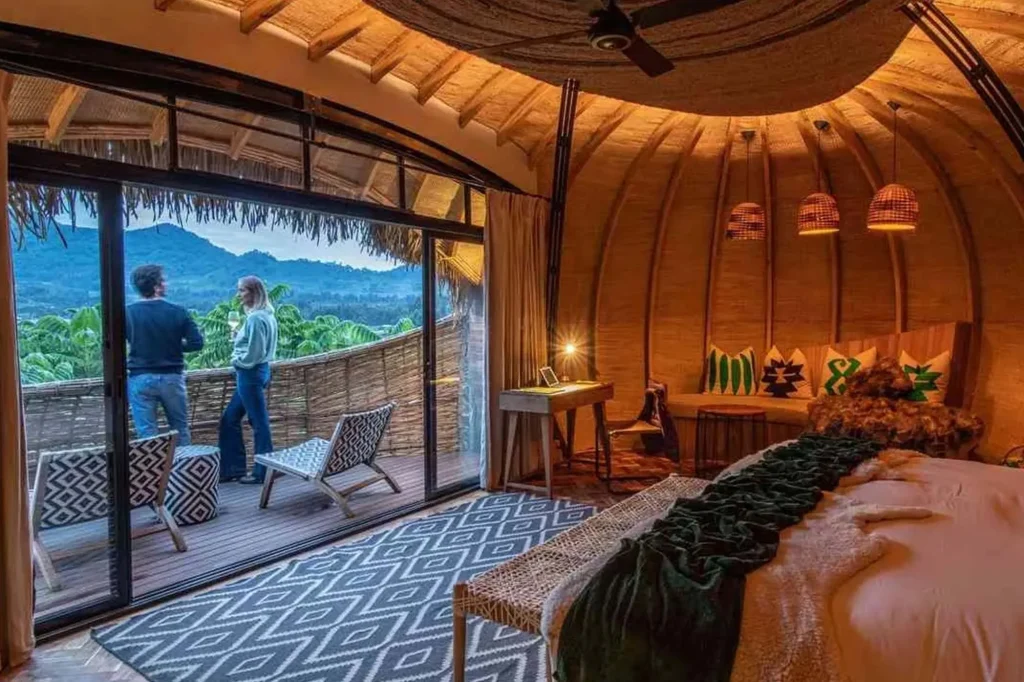
Bisate Lodge, Singita Kwitonda Lodge, One and Only Gorilla’s Nest, and Virunga Lodge all offer extraordinary settings, exceptional service, and sustainability credentials that have made them landmark properties in the global luxury travel market. Rates at these properties range from USD 800 to USD 3,500 per person per night.
Even mid-range properties near Volcanoes National Park are priced at levels that reflect both the destination’s premium positioning and the very limited availability of land near the park boundary. Rwanda’s land is intensively used, its highlands densely populated, and the buffer zone around the national park tightly controlled. Properties that sit with genuine views of the volcanoes and proximity to the trekking starting points are scarce, and scarcity drives price.
For travelers who compare a Rwanda gorilla lodge stay with accommodation costs in Uganda’s equivalent locations, the gap is significant. Comfortable mid-range lodges near Bwindi in Uganda run USD 150 to USD 300 per person per night. Comparable properties in Rwanda are USD 300 to USD 600. The pattern holds across every accommodation tier.
Infrastructure, Logistics and What You Are Actually Paying For
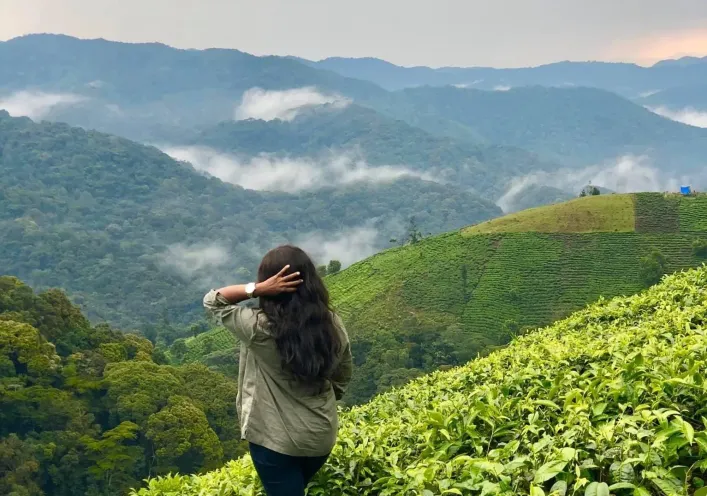
Part of what Rwanda’s higher price buys is logistical ease that is genuinely unusual in African safari travel. Kigali International Airport is modern, well-connected, and processes international visitors efficiently. Road quality throughout Rwanda is among the best in sub-Saharan Africa. The drive from Kigali to Musanze, the closest town to Volcanoes National Park, takes two and a half hours on fully paved road through scenic highland terrain. Safety and cleanliness standards throughout the country are consistently reported by visitors as noticeably high.
For travelers arriving from Europe or North America already fatigued from long-haul flights, the ability to land in Kigali, sleep one night in the city, and be at the gorilla trekking briefing point the following morning with a short, comfortable drive represents genuine value. Compare this to the Uganda equivalent: land in Entebbe, transfer to accommodation in or near Kampala, then face an eight to ten-hour drive to Bwindi on roads that range from good to genuinely difficult. For some travelers this difference is decisive.
Rwanda also invests significantly in marketing and brand building in international travel markets, particularly in Europe and North America.
The country’s ‘Visit Rwanda’ campaign has been visible and sustained over many years. This investment creates awareness and demand at a level that Uganda’s tourism promotion has not historically matched, and awareness creates a premium market willing to pay premium prices.
What Rwanda’s Price Includes That Uganda’s Does Not?
Conservation Investment
Seventy-five percent of Rwanda’s gorilla permit revenue is directed into conservation and community development. This means that each USD 1,500 permit generates USD 1,125 that goes directly into protecting the ecosystem and supporting the communities whose land choices determine whether the gorilla habitat expands or contracts. The communities surrounding Volcanoes National Park receive direct payments, social infrastructure investment, and employment opportunities that make gorilla conservation economically more attractive than alternative land uses. This is conservation financing at scale, and the gorilla population growth it has enabled is among the most documented success stories in African wildlife management.
Guide Quality and Training Standards
Rangers and guides in Volcanoes National Park undergo substantially more training and more rigorous ongoing assessment than in most other East African primate trekking locations. The Rwanda Development Board maintains strict certification requirements, and the guides’ deep knowledge of individual gorilla family members, their behaviours, their histories, and the ecological context of the park enriches the trekking experience in ways that go well beyond wildlife watching. Many visitors describe their guide’s commentary during and after the gorilla encounter as one of the most valuable parts of the entire trip.
Shorter Trekking Distances and Better Trail Maintenance
The trails within Volcanoes National Park are better maintained than comparable forest trails in Uganda. The park’s smaller geographical footprint means that habituated gorilla families tend to range less widely than Bwindi’s families, resulting in shorter average trek durations.
While Bwindi treks can last eight hours in extreme cases, Rwanda treks more commonly run two to four hours. The park’s lower altitude compared to some Bwindi sectors also makes the physical experience more manageable for visitors with limited fitness, which is part of why Rwanda attracts a higher proportion of older travelers and those with physical limitations.
| Cost Factor | Rwanda | Uganda |
| Gorilla Trekking Permit | USD 1,500 per person | USD 800 per person |
| Budget Lodge per Night | USD 150 to USD 250 pp | USD 60 to USD 150 pp |
| Mid-Range Lodge per Night | USD 300 to USD 600 pp | USD 150 to USD 350 pp |
| Luxury Lodge per Night | USD 800 to USD 3,500 pp | USD 450 to USD 1,500 pp |
| Drive from Capital to Park | 2.5 hours from Kigali | 8 to 10 hours from Entebbe |
| Daily Permit Capacity | 112 permits across 14 families | Limited but more flexible |
| 3-Day Budget Package | From USD 2,000 per person | From USD 1,200 per person |
| 7-Day Luxury Package | USD 7,000 to USD 15,000 pp | USD 4,000 to USD 8,000 pp |
Is Rwanda Worth the Higher Price?
This is the question that every Rwanda safari budget conversation eventually reaches, and the honest answer depends on what you are measuring.
If the measurement is cost per wildlife encounter, Uganda offers better value at every tier. The gorilla is the same species. The one-hour encounter is the same duration. The conservation experience is comparable. Uganda’s additional park diversity, with Queen Elizabeth, Murchison Falls, and Kibale Forest offering a much broader safari circuit than Rwanda can match in a single trip, further tips the value calculation toward Uganda for travelers who want variety.
If the measurement is total trip experience, Rwanda starts to close the gap. The logistical ease, the road quality, the accommodation standard across all tiers, the park infrastructure, and the completeness of the Kigali to gorillas experience in a short time all contribute to a trip that feels more polished and less effortful than comparable Uganda itineraries.
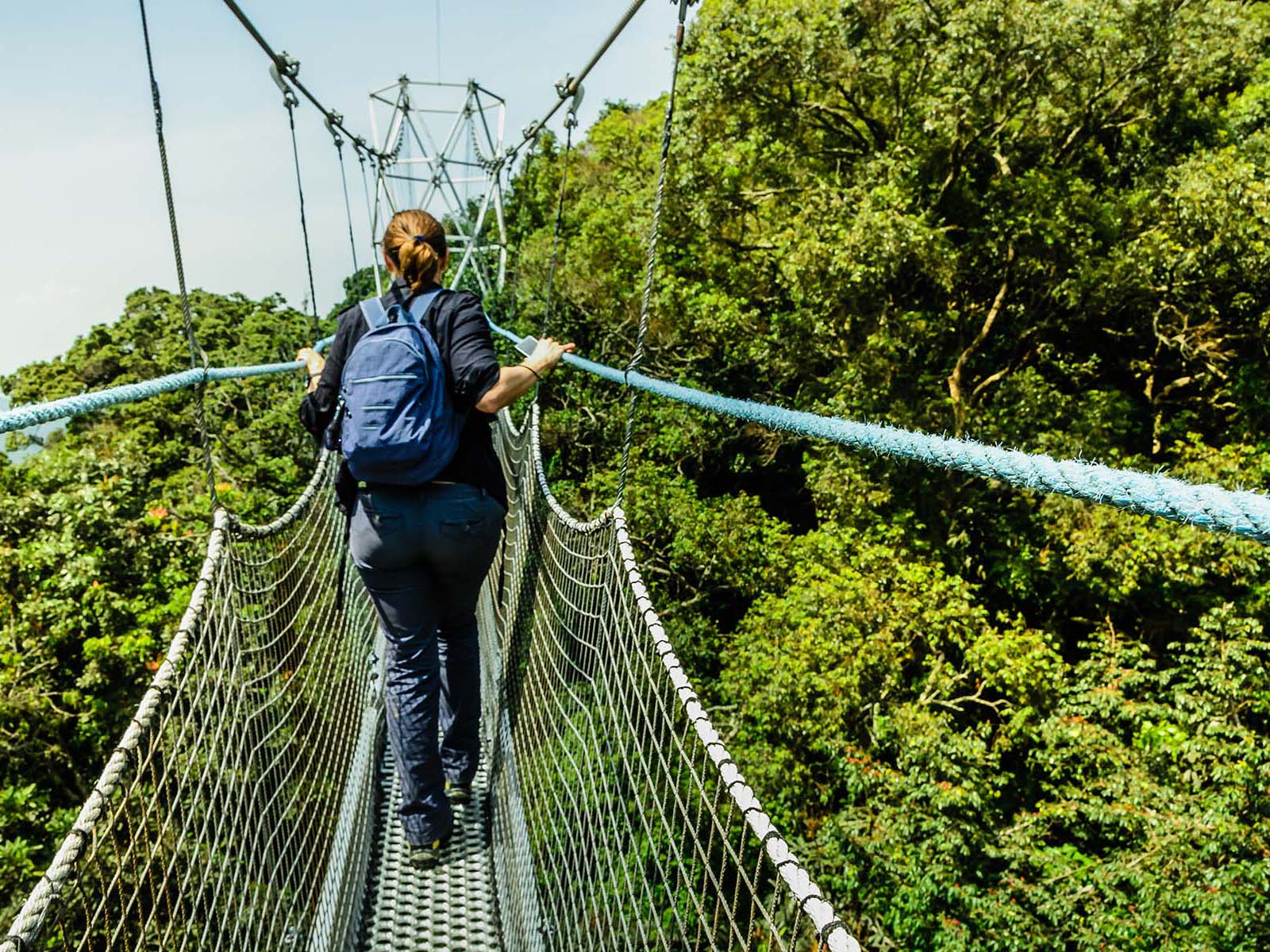
For travelers with limited time, for older visitors, for those visiting Africa for the first time and wanting reliable comfort throughout, and for anyone who values the particular quality of a premium low-volume wildlife experience, Rwanda’s additional cost often feels justified in retrospect.
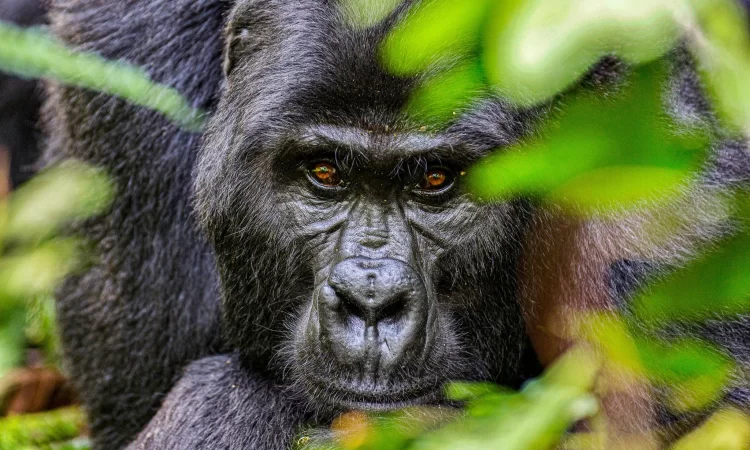
The answer most Rwanda visitors give, when asked directly, is that they knew it was expensive before they went and that after watching a silverback mountain gorilla hold their gaze for a full hour in a misty Virunga forest, they stopped thinking about the price. The gorilla does not make it cheap. But it does make it genuinely worth it for most people who go.
Ways to Reduce Rwanda Safari Costs
Travel in the Low Season
Rwanda’s low season runs from March through May with the long rains and again in November. Many lodges near Volcanoes National Park reduce their rates by twenty to thirty percent during these months, and some offer promotional packages with complimentary nights. The gorilla permit stays at USD 1,500 year-round, but accommodation savings can make a meaningful difference to the overall budget. The trekking experience during the rainy season can actually be more rewarding in some respects, with lush forest vegetation and fewer vehicles at the briefing point.
Choose a Shorter Itinerary
Rwanda is compact enough that a four to five-day trip covering Kigali, one or two nights near Volcanoes National Park, and the gorilla trek delivers the primary experience without requiring the extended stays that add cost in other East African countries. Because the drive from Kigali to Volcanoes is manageable in a half day, you do not need buffer nights for long transfers.
Combine Rwanda with Uganda
Many travelers find the best value proposition in visiting both countries on a single trip: gorilla trekking in Rwanda combined with a wildlife safari circuit in Uganda.
This combination delivers the logistical ease and permit efficiency of Rwanda alongside the multi-park wildlife diversity and lower accommodation costs of Uganda. The East Africa Tourist Visa, which covers Kenya, Uganda, and Rwanda on a single document at USD 100, makes the cross-border logistics practical.