Is Rwanda A Good Destination For Families?
Is Rwanda A Good Destination For Families? Rwanda carries a reputation that operates in layers. The first layer is the gorillas, and people know this one well. The second is the genocide history, which the country has faced with a transparency and determined forward motion that impresses visitors who come expecting grief and find instead a functioning, progressive, and deeply proud society. The third layer, the one that surprises most families, is how extraordinarily well suited the country is to traveling with children across a wide age range.
Rwanda is one of the safest countries in Africa to travel with children. Kigali, its capital, is consistently ranked among the cleanest cities on the continent. Its roads are well maintained and its national parks are easily accessible within two to three hours from the capital. Its people are genuinely welcoming in ways that go beyond professional hospitality. And its wildlife portfolio, while anchored by the famous mountain gorillas, contains enough variety across all its national parks to keep children of every age genuinely engaged.
The gorilla trekking age minimum of fifteen is the main practical constraint that families need to plan around. This guide explains how to build a Rwanda family trip that works beautifully regardless of whether all family members can trek, what the country offers children at different ages, and which parks and experiences are genuinely suited to multi-age family travel.
The Gorilla Question: What Every Family Needs to Know First
Gorilla trekking in Rwanda has a firm minimum age of fifteen, set by the Rwanda Development Board and enforced without exception. The reasoning is sound: mountain gorillas are highly susceptible to human respiratory illnesses and the risk that young children pose to the gorillas’ health is one that the conservation programme takes with great seriousness. The physical demands of trekking steep volcanic forest at altitude are also genuinely substantial, making the age requirement biologically sensible rather than merely regulatory.
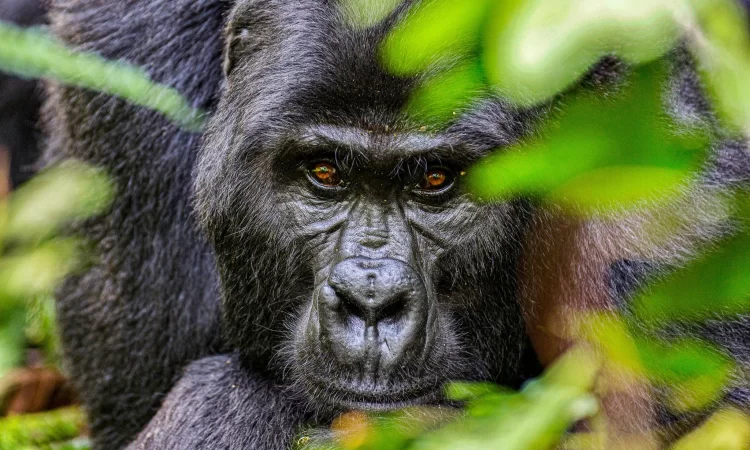
For families with teenagers who meet the threshold, gorilla trekking is one of the most genuinely transformative shared experiences that family travel offers. Standing in the forest with a sixteen-year-old and watching a silverback mountain gorilla arrange himself three meters away with calm, absolute authority is the kind of moment that both generations remember in complete detail for the rest of their lives. It is not simply a wildlife sighting. It is an encounter with intelligence that is human enough to be recognisable and wild enough to be genuinely humbling.
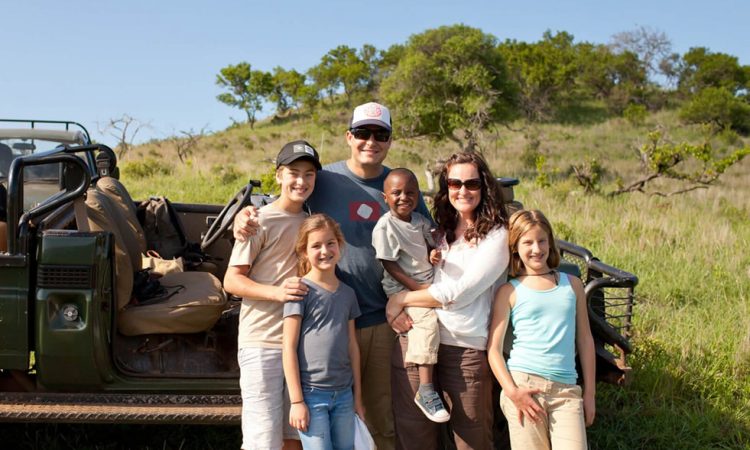
For families with younger children, Rwanda offers a set of alternatives that are genuinely excellent rather than consolation prizes. The country’s other national parks, its lake, its capital city, and its rich cultural offerings give families with children under fifteen a trip of real depth and variety. Families with a mix of ages, some above and some below fifteen, often arrange for the adults and older teens to trek while the younger children enjoy guide-led activities at the lodge or participate in the golden monkey tracking that has no age restriction.
Volcanoes National Park
Volcanoes National Park in Rwanda’s northwest sits within the Virunga Conservation Area, a chain of eight volcanoes spread across Rwanda, Uganda, and the Democratic Republic of Congo that together protect the largest population of mountain gorillas in the world. While the gorillas dominate the park’s reputation, the park offers several other experiences that work extremely well for families.
Golden Monkey Tracking:
Golden monkey tracking in Volcanoes National Park has no minimum age requirement and is a genuinely excellent wildlife experience in its own right. The Virunga golden monkey, found only in this specific ecosystem, wears a coat of striking gold and black that makes it instantly recognisable and beautiful in motion. The tracking groups are small, the experience is more physically accessible than gorilla trekking, and the monkeys themselves are playful, fast-moving, and highly expressive in a way that children often find even more engaging than the more solemn gorilla encounter.
A golden monkey family of several hundred individuals moves through bamboo forest with a chaotic energy that is the opposite of the gorillas’ composure. Watching them leap between bamboo stalks, chase each other at speed, and occasionally pause to study the humans below with apparent curiosity is one of those wildlife experiences that does not require adult vocabulary to appreciate fully. Children as young as five or six who are comfortable with a forest walk consistently love it.
Dian Fossey Research Centre Hike
For families with teenagers who have an interest in conservation science, primatology, or ecological history, the hike to Dian Fossey’s former Karisoke Research Centre in the forest above Volcanoes National Park adds an extraordinary dimension to the park experience. Dian Fossey spent nearly two decades studying mountain gorillas in this forest and her work, ultimately at the cost of her life, transformed scientific understanding of great ape behavior and built the political and public case for gorilla conservation that saved the species from extinction.
The hike takes approximately two hours each way through beautiful forest vegetation and ends at the site of the Karisoke research camp and Fossey’s grave, which sits at the edge of the gorilla habitat she dedicated her life to protecting. For academically curious teenagers this is not merely a nature walk but an encounter with scientific history that gives the entire gorilla conservation story a tangible location and a human face.
Volcano Hiking
The Virunga Volcanoes offer several hiking routes appropriate for fit teenagers and adults, with Mount Bisoke being the most popular. The hike to Bisoke’s crater lake summit takes approximately four to five hours each way through afro-alpine vegetation and rewards the effort with views across three countries from the crater rim. The scramble to the summit is not technically demanding but does require reasonable fitness and stamina, making it appropriate for active teenagers from about thirteen or fourteen upwards.
Akagera National Park:
Akagera National Park in eastern Rwanda along the Tanzanian border is the destination that completes the family Rwanda trip with the classic African game drive experience that children of all ages understand and genuinely love. The park was significantly revitalised after 2010 through a partnership between the Rwanda Development Board and African Parks, which reintroduced lions and rhinos and established proper management across the park’s diverse habitats of lakes, papyrus swamps, and savannah.
What makes Akagera particularly well suited to family travel is the terrain. The game viewing areas have flat, well-maintained tracks that make long drives comfortable even for young children, and the diversity of habitats along a single route means the sightings change character frequently enough to maintain attention. Lions, elephants, giraffes, zebras, buffaloes, hippos, and Nile crocodiles all occur regularly. The park now supports the Big Five following the rhino reintroduction, which is a source of considerable pride for Rwanda’s conservation community.
Boat Safari on Lake Ihema
The boat safari on Lake Ihema is the experience that consistently delights younger children the most, partly because it requires no walking and partly because the hippos are extraordinarily close. Lake Ihema occupies a significant portion of Akagera’s eastern boundary and supports one of the largest hippo populations in East Africa.
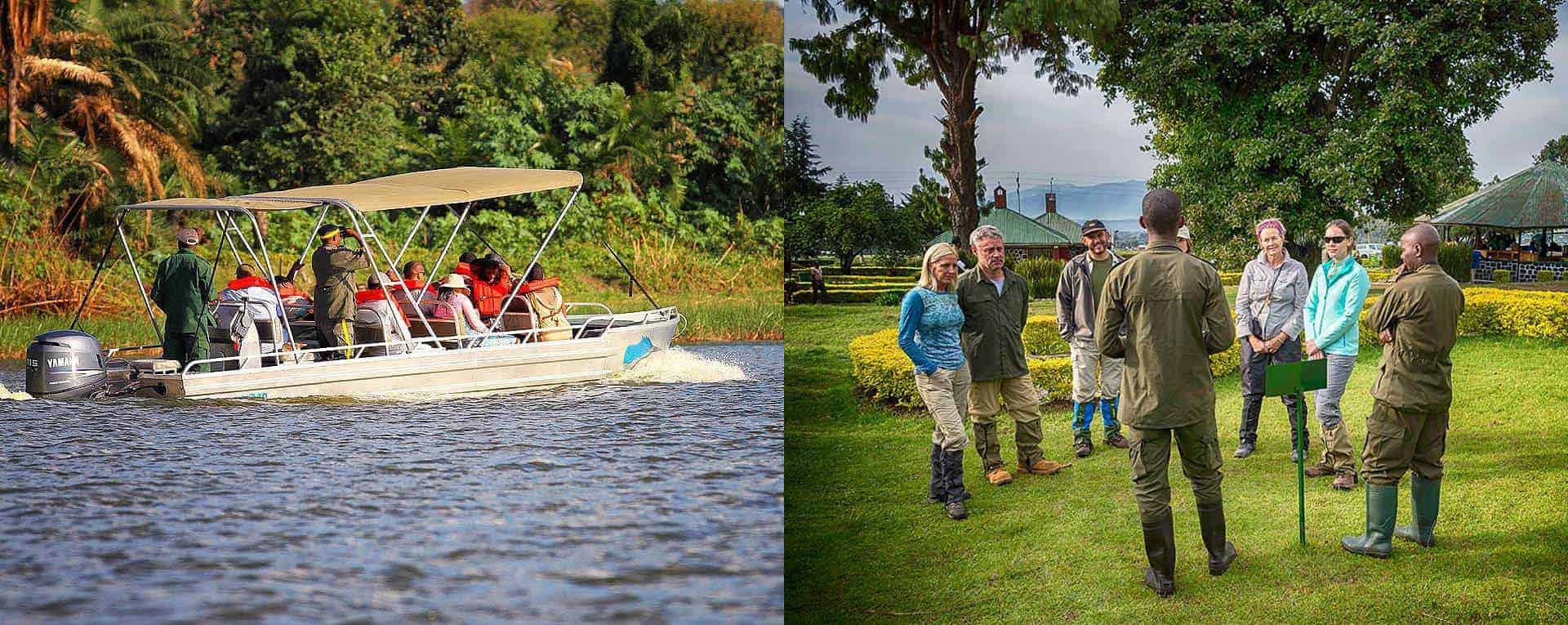
The boat drifts at close range among pods of dozens of individuals, and the combination of their sheer size, their submarine-like surfacing habits, and their occasional yawning displays of enormous teeth produces genuine excitement in children of almost any age. Crocodiles bask on the banks. African fish eagles call from above. Pelicans and herons work the shallows. It is one of the most effortlessly rewarding wildlife experiences in East Africa for families.
Night Game Drives
Akagera offers night game drives that are a genuine family highlight. Spotting the yellow eyes of civets, genets, and bush babies in the torchlight, watching a hyena trot across the road ahead of the vehicle, and experiencing the park at night when the sounds and shapes are entirely different from the daylight hours gives older children and teenagers a dimension of the safari experience that their younger siblings may find more unsettling but that most children from about eight upwards find thrilling.
| Activity | Minimum Age | Duration | Family Suitability |
| Gorilla Trekking | 15 years strictly | 2 to 8 hours in forest | Teens and adults only |
| Golden Monkey Tracking | No minimum | 2 to 4 hours | Excellent for all ages |
| Akagera Game Drive | No minimum | 3 to 4 hours | Excellent for all ages |
| Lake Ihema Boat Safari | No minimum | 2 to 3 hours | Outstanding for young children |
| Akagera Night Drive | 8 years suggested | 2 to 3 hours | Teens and older children |
| Mount Bisoke Hike | 13 to 14 suggested | Full day | Active teens and adults |
| Dian Fossey Hike | 12 suggested | 6 hours | Curious older children, teens |
| Kigali City Tour | No minimum | Half day | All ages |
| Nyungwe Canopy Walk | 6 to 8 suggested | 2 to 3 hours | Older children, teens, adults |
Nyungwe Forest National Park
Nyungwe Forest National Park in southwestern Rwanda is one of the oldest and most biologically diverse mountain rainforests in Africa, with thirteen primate species including chimpanzees, eleven types of colobus monkey, and the startlingly vocal grey-cheeked mangabey. While chimpanzee trekking carries the same fifteen-year age minimum as gorilla trekking, the park offers several other experiences that work well for families with children of various ages.
The canopy walkway suspended fifty-five metres above the forest floor is Nyungwe’s most distinctive visitor experience and one of the most unusual things a family can do in East Africa. Walking across a series of suspension bridges through the forest canopy, with the forest floor invisible below and the canopy spread at eye level, changes the perspective on the ecosystem in a way that is both educational and physically thrilling. For older children and teenagers comfortable with heights, it is one of those experiences that people talk about long after the trip.
The large habituated colobus monkey troop in Nyungwe, which can contain hundreds of individuals, is accessible on guided walks with no age minimum. Watching this many colobus monkeys move through the forest simultaneously, their distinctive black and white coloring flashing through the vegetation as the group travels, is a wildlife encounter of genuine scale.
Kigali:
Kigali is consistently rated as one of Africa’s cleanest, and safest capital cities, and it genuinely rewards a day or two of family exploration rather than being treated as a transit point. The city sits across a series of hills that give it a distinctly scenic quality, and its streets, gardens, and markets are maintained to a standard that makes walking around comfortable and enjoyable even with young children.
For families with older children and teenagers, the Kigali Genocide Memorial provides an education in recent African history that contextualizes everything else the country offers. The memorial documents the 1994 genocide with sensitivity and depth and includes a section specifically designed for younger visitors that addresses the history in age-appropriate terms. A visit here does not overshadow the rest of a Rwanda family trip; it enriches it by giving the country’s remarkable present the context of its extraordinary recent past.
The Kimironko Market, Kigali’s largest and most atmospheric, is an ideal family morning. Fresh tropical fruit, craft stalls, fabric vendors, and the organised energy of a genuinely local market provide a sensory immersion in everyday Rwandan life that is appropriate for children of almost any age and more engaging than most museum visits.
Lake Kivu on Rwanda’s western border offers the family holiday relaxation that balances the wildlife intensity of the national parks. Its calm freshwater with gentle beaches and warm, clean swimming conditions make it an ideal place to spend a day or two unwinding. Kayaking, boat trips around the lake’s islands, and visits to local fishing villages give active families activities beyond simply lying on the beach, and the scenery of green hills reflecting on the lake is consistently beautiful.
Best Time for a Rwanda Family Trip
The two dry seasons are the most meaningful for family travel: June through September and December through February. During these periods, park tracks are firmer, gorilla trekking trails are more accessible, and the weather is generally pleasant. The long dry season from June through September is the most popular and the period when gorilla permits are hardest to secure, so book at least three to six months ahead for travel in these months.