Gorilla Trekking in Rwanda Cost Per Person
This guide breaks down every cost category for a gorilla trekking Rwanda trip, shows what a realistic per-person total looks like at three comfort levels, and flags the confirmed 2027 pricing change that affects anyone planning ahead. Read alongside our Uganda cost breakdown, it should give you enough detail to compare the two countries on , itemised numbers rather than headline permit prices alone.
Rwanda’s gorilla permit price, $1,500, is the number most people fixate on when researching this trip, and it is often the number that makes travellers assume Rwanda is simply unaffordable. The reality is more specific than that.
Rwanda’s total per-person cost is higher than Uganda’s across almost every category, not just the permit, because Rwanda has deliberately positioned itself as a premium destination. Understanding exactly where that extra cost sits, and where you still have real choices, makes the difference between an accurate budget and an unpleasant surprise on your final invoice.
Should You Budget for Rwanda Specifically, or Compare Countries First?
Short answer: decide on Rwanda specifically once you know whether its advantages, shorter flight and transfer times, a more concentrated luxury lodge scene, and golden monkey tracking alongside gorillas, are worth the higher cost compared with Uganda for your particular trip.
Rwanda is not simply “the expensive option” without offsetting benefits. Volcanoes National Park sits roughly two and a half hours from Kigali International Airport, considerably closer than Bwindi is to Entebbe, which shortens your total trip length and reduces road transfer fatigue.
If your available travel time is limited, this convenience can be worth the cost difference on its own, separate from any comfort-tier considerations. Kigali itself also makes the arrival experience considerably smoother than Entebbe, with shorter immigration queues and a compact, well-organised airport that gets travellers onto the road faster after a long international flight.
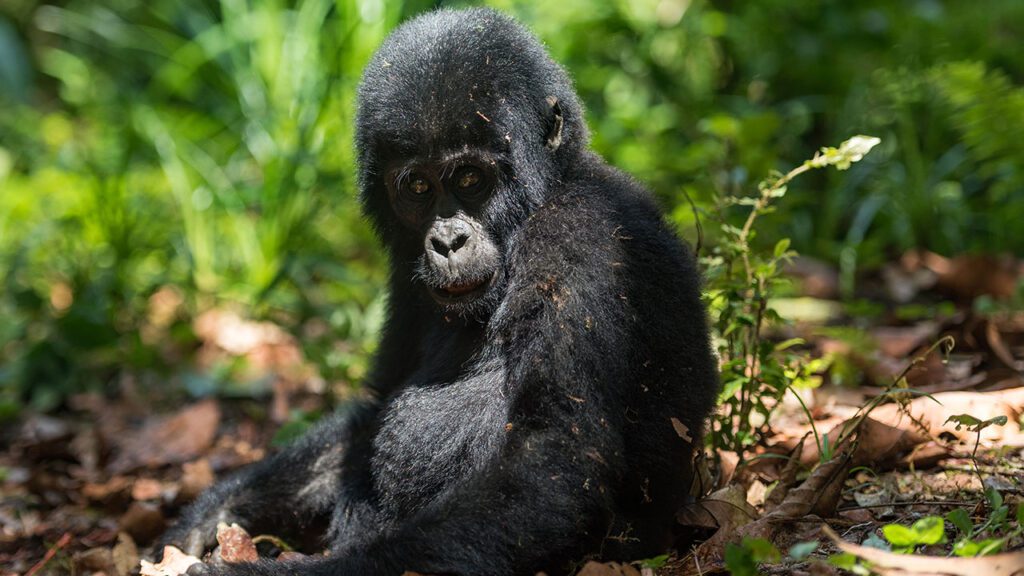
Why Rwanda Costs More Across the Board
Rwanda’s tourism strategy over the past decade has deliberately targeted high-value, lower-volume visitors rather than competing with Uganda on price and visitor numbers.
This shows up not just in the permit price but in accommodation positioning too: Volcanoes National Park has one of the highest concentrations of luxury lodges anywhere in East Africa’s gorilla trekking regions, and the budget accommodation tier that exists comfortably around Bwindi is considerably thinner around Kinigi, Rwanda’s main gorilla trekking gateway town.
Practical implication: it is harder to build a low-cost Rwanda gorilla trekking trip than a low-cost Uganda one, simply because the surrounding infrastructure skews toward mid-range and luxury rather than budget.
The Full Cost Breakdown Per Person
| Cost Item | Approximate Cost Per Person | Notes |
| Gorilla trekking permit | $1,500 | Fixed by Rwanda Development Board |
| Gorilla habituation experience permit | $1,500, rising to $1,800 in January 2027 | Allows up to four hours with a family still being habituated, priced separately from the standard permit |
| Park entry and conservation fee | Typically bundled into the permit | Rwanda generally bundles this differently from Uganda; confirm current structure at booking |
| Porter fee | $15 to $20 per trek day | Optional but strongly recommended |
| Accommodation (per night, budget) | $60 to $100 | Limited but growing availability near Kinigi |
| Accommodation (per night, mid-range) | $250 to $450 | The most common tier for first-time Rwanda visitors |
| Accommodation (per night, luxury) | $700 to $1,500+ | Rwanda’s strongest category, with several globally recognised luxury properties |
| Ground transport (shared vehicle) | $60 to $110 per day | Slightly higher than Uganda given shorter but sometimes premium-priced transfer options |
| Ground transport (private 4×4 with driver-guide) | $180 to $280 per day | Reflects Rwanda’s generally higher service-level pricing |
| Meals (where not included) | $25 to $60 per day | Rwanda’s mid-range and luxury dining tends to price higher than Uganda’s equivalent tier |
What a Realistic Total Trip Looks Like, Per Person
| Trip Style | Total Per Person (4 to 5 days) | What’s Included |
| Budget | $2,300 to $3,000 | Permit, limited budget accommodation, shared vehicle, basic meals, porter fee |
| Mid-range | $3,600 to $5,000 | Permit, comfortable ensuite lodge, private vehicle, full board meals, standard tips |
| Luxury | $6,500 to $10,000+ | Permit, exclusive luxury lodge, private guide and vehicle throughout, all-inclusive meals and premium service |
Notice that even the “budget” tier in Rwanda sits meaningfully above Uganda’s equivalent, almost entirely because of the $700 permit price difference alone. This is the single clearest illustration of why the permit, while fixed, still drives most of the overall cost gap between the two countries.
It also explains why comparing a Rwanda quote against a Uganda quote line by line, rather than by bottom-line total alone, is the only way to understand whether the extra spend is going toward the permit, the accommodation, or better service throughout.
How Group Size Changes Your Per-Person Cost
| Group Size | Effect on Per-Person Cost | Why |
| Solo traveller | Highest per-person cost | Single supplement on Rwanda’s pricier accommodation tiers has a larger absolute impact than in Uganda |
| Couple | Moderate per-person cost | Standard double-occupancy pricing applies at most lodges |
| Small group (4 to 6) | Lowest per-person cost | Private vehicle and guide costs split more favourably across a larger group |
What a 7-Day Itinerary Actually Costs
Most Rwanda gorilla trekking guests extend their trip beyond the park itself, commonly adding Akagera National Park for a savannah safari component or a few nights in Kigali. Here is what a fuller 7-day itinerary costs per person.
| Trip Style | Total Per Person (7 days) | What’s Added Beyond the Core Gorilla Trip |
| Budget | $3,000 to $3,900 | 2 to 3 extra nights budget-to-mid accommodation, shared vehicle, Akagera day safari |
| Mid-range | $5,200 to $7,000 | 2 to 3 extra nights ensuite lodge, private vehicle, full Akagera safari with game drives |
| Luxury | $9,500 to $14,000+ | 2 to 3 extra nights luxury lodge, private guide throughout, premium Akagera safari and boat cruise |
What’s Usually Included in an Operator’s Quoted Price
As with any gorilla trekking quote, the headline number only means something once you know what it covers, and this matters even more in Rwanda given how much of the total sits in accommodation and service tiers rather than the fixed permit alone.
- Almost always included: the gorilla permit, accommodation as specified, ground transport between listed destinations, an English-speaking driver-guide, and meals as noted in the itinerary.
- Sometimes included, sometimes separate: airport transfers in Kigali, golden monkey tracking, bottled water during activities, and laundry service.
- Almost never included: international flights, Rwanda’s entry visa fee, travel insurance, tips and gratuities, alcoholic beverages, and personal purchases.
Given Rwanda’s premium positioning, it is particularly worth confirming whether a quoted luxury lodge rate is all-inclusive, since some high-end properties price drinks, spa treatments, and certain excursions separately even within an otherwise premium package. A rate that looks unusually competitive against a comparable property nearby is worth a direct question about exactly what is and is not bundled in, rather than an assumption either way.
Independent Booking vs Booking Through an Operator
| Approach | Typical Cost Impact | Trade-offs |
| Fully independent (self-drive, self-booked lodges) | Rarely meaningfully cheaper in Rwanda | Rwanda’s compact road network makes self-drive feasible, but permit booking and lodge negotiation still favour local expertise |
| Booking through a local ground operator | Comparable total cost, generally better value | Professional logistics, vetted luxury and mid-range properties, and support if plans need to change |
| Booking through a large international agency | Often meaningfully higher cost | Familiar single point of contact, but frequently a significant markup on the same underlying local services |
Standard Permit vs Habituation Experience
Rwanda offers two distinct gorilla permit types, and confusing them is a common and expensive planning mistake. The standard permit gives you one hour with a fully habituated family, priced at $1,500.
The habituation experience permit allows up to four hours with a family still in the process of becoming accustomed to human presence, working alongside researchers and trackers, and is priced separately, currently matching the standard rate but rising to $1,800 in January 2027.
Practical implication: the habituation experience is a different, longer, more research-oriented activity, not simply a longer version of the standard trek, and it suits travellers specifically interested in the research and conservation side of gorilla monitoring rather than those who just want the classic one-hour encounter.
What Else Adds to Your Rwanda Budget
Beyond the core permit and accommodation costs, a handful of well-chosen add-ons round out a Rwanda gorilla trekking itinerary without dramatically increasing the total spend.
- Golden monkey tracking. A lower-cost add-on, typically around $100, available within the same park and easily combined with your gorilla trekking day.
- Dian Fossey Tomb hike. A moderate hike to the original Karisoke Research Center site, usually priced separately from the standard park entry.
- Twin Lakes boat excursion. An optional, relaxed half-day activity for a change of pace, typically an affordable add-on relative to the rest of the trip.
- Kigali city stay. Many itineraries include a night in Kigali before or after the park visit, adding a worthwhile cultural stop, including the Kigali Genocide Memorial, at a modest cost relative to park-area lodging.
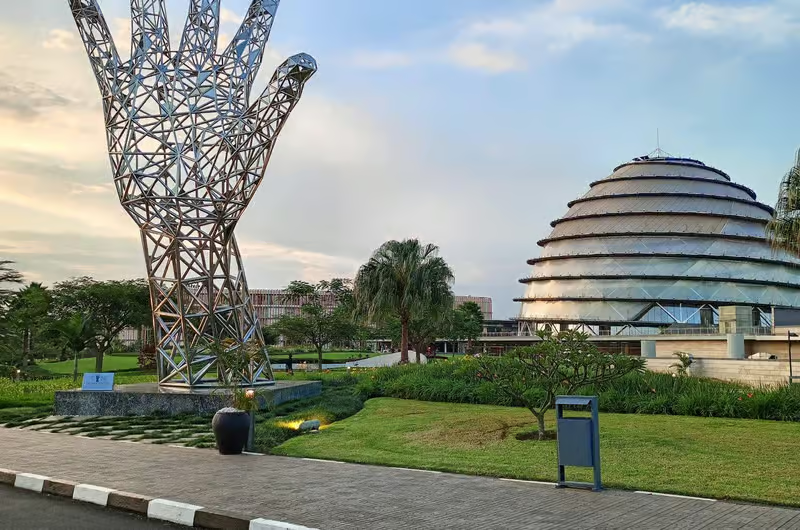
Kigali City tours
When Season Affects Your Rwanda Cost
| Season | Effect on Total Cost | Notes |
| Dry season (June to September, December to February) | Highest accommodation demand and rates | Book significantly in advance, particularly for Rwanda’s limited luxury lodge inventory |
| Wet season (March to May, October to November) | Lower accommodation rates | Genuine savings opportunity; permit price remains unaffected by season |
Planning Advice to Manage Your Rwanda Budget
- Book your permit before the 2027 habituation price increase if that experience interests you. Locking in current pricing ahead of the January 2027 change is a straightforward way to save on this specific permit type.
- Combine golden monkey tracking with your gorilla trek day. The marginal cost is low relative to booking it as a separate trip.
- Consider a mid-range rather than luxury lodge if budget matters more than the top-tier experience. Rwanda’s mid-range accommodation is still considerably more polished than Uganda’s equivalent tier, given the country’s overall premium positioning.
- Ask specifically whether your quote includes Rwanda’s park entry structure correctly. Rwanda sometimes bundles this differently from Uganda, and a quote that looks unusually low may simply be omitting a fee rather than underpricing the trip.
- Weigh the shorter transfer time against the higher permit cost honestly. If your total available travel time is tight, Rwanda’s convenience may be worth paying for; if time is flexible, Uganda’s lower permit price may matter more.
Frequently Asked Questions
Why is Rwanda’s permit almost double Uganda’s?
Rwanda has deliberately positioned itself as a premium gorilla trekking destination with a lower visitor volume strategy, reflected in the higher permit price, shorter and more convenient airport transfer, and a concentration of luxury lodges around the park.
Is the habituation experience worth the extra time investment?
For travellers specifically interested in gorilla research and behaviour, yes, since four hours offers considerably more observation time than the standard one hour. For most first-time trekkers, the standard permit delivers the core experience at a lower and, for now, more stable price.
Does Rwanda offer any lower-cost gorilla trekking option?
Not within Rwanda itself. Travellers specifically seeking a lower permit cost within the same broader region typically consider Uganda or, with careful security assessment, DR Congo instead. Rwanda’s own pricing structure does not include a discounted domestic alternative the way some destinations offer off-peak or secondary-site pricing.
Are there budget accommodation options near Volcanoes National Park at all?
Yes, though the selection is considerably thinner than around Uganda’s Bwindi sectors. A small number of guesthouses and simpler lodges exist near Kinigi, but most Rwanda gorilla trekking accommodation sits in the mid-range to luxury tiers.
Will the standard trekking permit price also rise in 2027?
No increase to the standard one-hour permit has been announced at the time of writing, only the habituation experience permit. This may change, so confirm current pricing when booking.
Will the standard trekking permit price also rise in 2027?
No increase to the standard one-hour permit has been announced at the time of writing, only the habituation experience permit. This may change, so confirm current pricing when booking.
Is it worth adding Akagera National Park to a Rwanda gorilla trip?
For most guests, yes. Akagera offers a savannah safari experience, including Big Five wildlife, within the same small country, making Rwanda one of the few gorilla trekking destinations where you can reasonably combine primates and classic game viewing without a long additional flight.
Can I pay for my Rwanda permit and lodges in Rwandan francs?
Permits are priced and paid in US dollars. Many lodges and services also quote in US dollars for international guests, though day-to-day purchases within Rwanda use the Rwandan franc.
Getting an Accurate Number for Your Rwanda Trip
Rwanda’s higher cost per person reflects a different market positioning than Uganda’s, not a markup without justification, and travellers who understand this going in tend to budget more accurately and feel better about the spend once they are standing in Volcanoes National Park. The permit is the largest single line item, but accommodation choice still gives you meaningful control over your total per-person cost.