Hiking Mount Muhabura in Rwanda
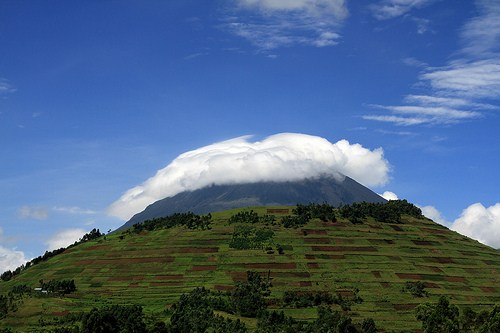
Mount Muhabura, sometimes spelled Muhavura, meaning “the guide” in Kinyarwanda, earned its name because its distinctive, tall conical peak has served for centuries as a navigation landmark visible from a considerable distance across the surrounding landscape.
At 4,127 metres, it is the second-highest of Rwanda’s Virunga volcanoes, and among the single-day hikes in the range, it is widely considered the most physically demanding, a sustained, steep climb rewarded with a crater lake sitting at the summit. Guides who have led this route for years often describe it as the hike that separates fit travellers from those who simply assumed a safari trip meant modest physical demands.
This guide covers exactly what makes Muhabura’s climb so difficult, what the summit crater lake experience actually involves, how to train and prepare realistically, and how it compares to Rwanda’s other volcano hiking options, so you can go in with accurate picture of what the day will demand of you.
Should You Attempt Muhabura?
Short answer: yes, if you have good cardiovascular fitness and are prepared for a long, sustained, steep climb, since this is the most physically demanding single-day hike in the Virunga range and should not be underestimated based on safari fitness alone.
Muhabura is not a casual add-on to a gorilla trekking itinerary. The climb involves a greater sustained elevation gain than Sabyinyo, without the technical ladder sections, meaning the challenge here is almost entirely cardiovascular and muscular endurance rather than technical scrambling.
Travellers who are reasonably fit but have not done hill or mountain hiking training beforehand often underestimate how demanding this specific climb is until they are several hours in, at which point turning back becomes almost as difficult as continuing.
Why Muhabura Stands Out
Muhabura’s defining feature is its crater lake, a small body of water sitting within the volcano’s summit crater, one of only two Virunga peaks accessible to standard hiking permits that offers this specific reward, the other being the considerably more demanding, multi-day Karisimbi.
Reaching a crater lake after a single day’s strenuous effort is a rare enough experience in East African hiking to justify the climb on its own, and the mountain’s classic, symmetrical conical shape, in contrast to Sabyinyo’s jagged ridge, makes for a more traditional but equally rewarding mountain-climbing sensation.
The visual payoff of a still, quiet lake sitting inside an ancient crater, reached entirely on foot, is the kind of image that draws serious hikers back to the Virunga range specifically for this mountain.
Where Muhabura Fits Among Rwanda’s Volcanoes
| Peak | Height | Difficulty | Standout Feature |
| Mount Gahinga | 3,474 metres | Moderate | Ends at a crater lake, the gentlest of the volcano hikes |
| Mount Sabyinyo | 3,669 metres | Strenuous, with exposed ladders | Tripoint of three countries |
| Mount Muhabura | 4,127 metres | Very strenuous, sustained climb | Summit crater lake, greatest elevation gain among single-day hikes |
| Mount Karisimbi | 4,507 metres | Extreme, requires overnight camping | Rwanda’s highest peak |
What the Muhabura Hike Actually Involves
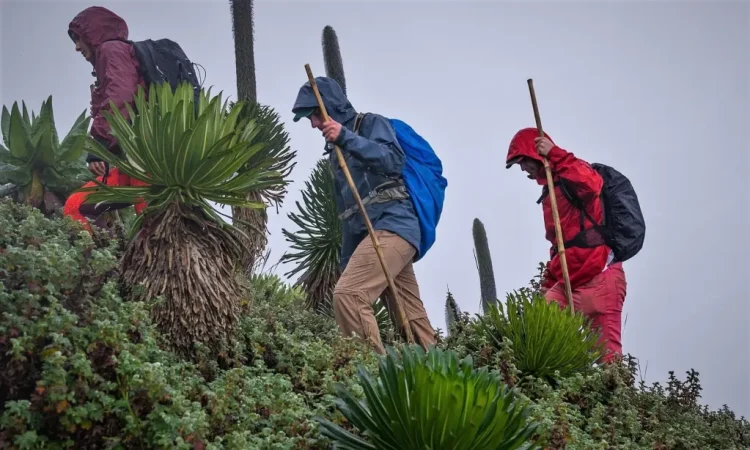
The climb begins at Volcanoes National Park headquarters in Kinigi, following a mandatory ranger briefing and an armed escort assignment standard across all Virunga volcano hikes. The trail climbs steadily and relentlessly, moving through cultivated farmland, then bamboo forest, then a zone of giant lobelia and groundsel characteristic of Afro-alpine moorland, before a final steep push across looser volcanic scree to the crater rim and summit.
Each vegetation transition also marks a shift in trail character, and experienced guides use these zones as natural checkpoints for assessing how the group is pacing relative to the day’s overall timeline.
Practical implication: unlike Sabyinyo, where difficulty concentrates in a specific technical section near the top, Muhabura’s challenge is sustained and continuous from a fairly early point in the hike, which changes how you should pace and hydrate throughout the day rather than saving effort for one crux section.
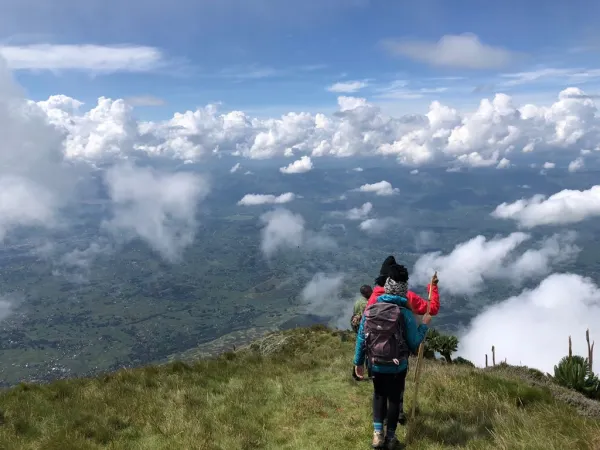
The summit itself offers rewarding payoff: a clear-day view extending across the entire Virunga range, into Uganda and DR Congo, alongside the crater lake itself, often shrouded in mist that clears and reforms throughout the morning, adding a striking, almost otherworldly quality to the summit experience.
How Difficult Is Muhabura, Honestly
| Factor | What to Expect |
| Total duration | 8 to 9 hours round trip, among the longest single-day hikes in the range |
| Elevation gain | Approximately 1,600 metres from the trailhead, the greatest of any single-day Virunga hike |
| Terrain | Farmland, bamboo forest, moorland, then loose volcanic scree near the summit |
| Technical difficulty | Low technical demand, but sustained steepness throughout |
| Fitness required | strong cardiovascular fitness; more demanding than either Sabyinyo or a standard gorilla trek |
When to Hike Muhabura
| Season | Conditions | Recommendation |
| June to September, December to February (dry seasons) | Firmer scree sections, clearer summit crater lake views | The strongly preferred window for this specific hike |
| March to May, October to November (wet seasons) | Loose scree becomes considerably more slippery and hazardous | Generally discouraged given the added risk on already steep terrain |
What the Hike Costs
| Item | Approximate Cost | Notes |
| Muhabura hiking permit | $100 | Separate from the gorilla trekking permit |
| Porter fee | $15 to $20 | Very strongly recommended given the hike’s duration and demand |
| Ranger and armed escort | Included in permit | Mandatory for all Virunga volcano hikes |
How to Actually Train for This Climb
- Build cardiovascular base in the months beforehand. Regular hiking, running, or stair-climbing sessions of 45 minutes or more, several times weekly, make a real difference to how the sustained climb feels.
- Practice hiking with a loaded daypack. Conditioning your shoulders and legs to carry weight over distance reduces fatigue considerably on the day itself.
- Do at least one long training hike with significant elevation gain if possible. This is more useful preparation than flat-terrain cardio alone.
- Arrive in Rwanda with a day or two of lighter activity before attempting the climb. Jet lag and travel fatigue compound the difficulty of an already demanding day.
- Take the ranger’s pace seriously rather than pushing ahead. Rangers set a sustainable pace precisely because they have seen what happens when hikers go out too fast on this specific mountain.
The History Behind the Name
Muhabura’s role as a navigational landmark predates modern tourism by centuries. Its tall, symmetrical silhouette rises distinctly above the surrounding Virunga range and remains visible from a considerable distance across the Rwandan countryside, which is precisely why travellers, traders, and herders historically used it to orient themselves when moving through the region.
This practical, navigational history stands in contrast to Sabyinyo’s more recent fame as a tripoint curiosity, giving Muhabura a slightly different character, less a novelty destination and more a mountain that has mattered to the people living in its shadow for generations. That older, working relationship with the landscape is part of what makes standing at its summit feel different from a purely recreational climb.
The Mist and Microclimate at the Summit
One detail that surprises many first-time Muhabura hikers is how quickly weather conditions shift near the crater rim. The summit frequently sits at the boundary of cloud formation, meaning hikers can experience clear visibility one moment and near-total whiteout mist minutes later, only for it to clear again shortly after.
This is a normal, expected feature of the mountain’s higher elevation rather than a sign of deteriorating weather, though it does mean patience is often rewarded, waiting even twenty or thirty minutes at the crater rim can produce a clear window for photographs that seemed impossible on arrival.
Guides who know the mountain well can often sense when a clearing is likely, and it is worth trusting their judgement on whether to wait a little longer before beginning the descent.
Practical implication: do not rush your summit time based on an initially disappointing misty view; conditions at this elevation change quickly enough that a short wait often delivers considerably better visibility.
Who Should Hike Muhabura
| Traveller Type | Fit | Reasoning |
| Fit, experienced hikers seeking physical challenge | Strong fit | The sustained climb rewards real cardiovascular fitness with one of the range’s most demanding, satisfying summits |
| Travellers who exercise regularly but have not hiked seriously | Moderate fit, with real preparation | Achievable with training beforehand, but not a hike to attempt casually |
| Travellers with knee or joint concerns | Poor fit | The sustained steep descent in particular places significant strain on knees over several hours |
| Photographers interested in unique summit conditions | Strong fit | The crater lake and shifting mist create striking, ever-changing compositions |
| First-time hikers with no prior mountain experience | Generally not recommended | Better served starting with Gahinga or a shorter hike before attempting Muhabura |
What to Pack for Muhabura
- Trekking poles if you have them or can hire them locally. The sustained descent in particular benefits enormously from the extra stability and reduced knee strain poles provide.
- A high-calorie snack strategy for the full day. The sustained exertion burns through energy reserves faster than a shorter hike, and small, regular snacks help maintain steady energy levels.
- Gaiters for the scree sections. Loose volcanic material near the summit works its way into boots persistently without this added protection.
- A warm layer for summit mist conditions. Damp, cool air at the crater rim feels considerably colder than the dry farmland conditions at the trailhead.
- Blister prevention supplies. The hike’s duration makes even minor foot friction issues considerably more consequential than on a shorter trek.
Combining Muhabura With Other Rwanda Activities
Given Muhabura’s physical demands, we strongly recommend not scheduling it on a day immediately before or after gorilla trekking or another strenuous hike. A sensible sequence places Muhabura either at the very start of your Rwanda trip, when you are freshest, or with at least one lower-intensity rest day buffering it from your gorilla trek. Guests who ignore this advice and attempt back-to-back demanding days consistently report a noticeably worse experience on the second activity, regardless of how enjoyable the first one was.
Frequently Asked Questions
Is Muhabura harder than Sabyinyo?
Generally yes, in terms of sustained physical exertion and total elevation gain, though Sabyinyo’s ladder sections introduce a height-exposure factor that some hikers find more challenging mentally despite Muhabura’s greater physical demand. Which mountain feels harder in practice often comes down to whether a hiker struggles more with sustained cardiovascular effort or with exposed heights.
Can I swim in the summit crater lake?
This is not a standard or recommended activity; the lake is appreciated as a scenic and geological feature rather than a swimming destination, and cold temperatures and altitude make swimming inadvisable regardless.
How fit do I actually need to be for Muhabura?
You should be able to comfortably sustain 60 to 90 minutes of continuous uphill walking or equivalent cardiovascular exercise without significant difficulty before attempting this specific hike.
Is a permit required separately from the gorilla trekking permit?
Yes, Muhabura requires its own dedicated hiking permit, priced and booked separately from any gorilla trekking permit.
What happens if I cannot complete the full climb?
Rangers will assess your condition and can arrange for you to wait at a safe point while the rest of the group continues, though this means missing the crater lake summit view. Communicating honestly about your energy levels partway through is far better than pushing to a point of difficulty.
Is trekking pole use common on this hike?
Yes, many hikers, including experienced ones, use trekking poles specifically for Muhabura given the sustained descent, and rental options are often available locally if you do not want to travel with your own.
How does the crater lake compare to Karisimbi’s summit features?
Muhabura’s crater lake is scenic reward reachable within a single demanding day, while Karisimbi requires an overnight camping trek to reach its higher, colder summit, which does not feature a comparable lake but offers its own distinct high-altitude crater landscape.
Deciding If Muhabura Is Right for You
Muhabura rewards hikers with cardiovascular fitness and a taste for sustained physical challenge, delivering one of the most demanding but satisfying single-day summit experiences available anywhere in East Africa. This is not the hike to attempt on a whim or general safari fitness alone, and honest preparation beforehand makes the difference between a rewarding day and miserable one spent wishing you had trained harder in the months before your trip.