Gorilla Guardians Village, Rwanda
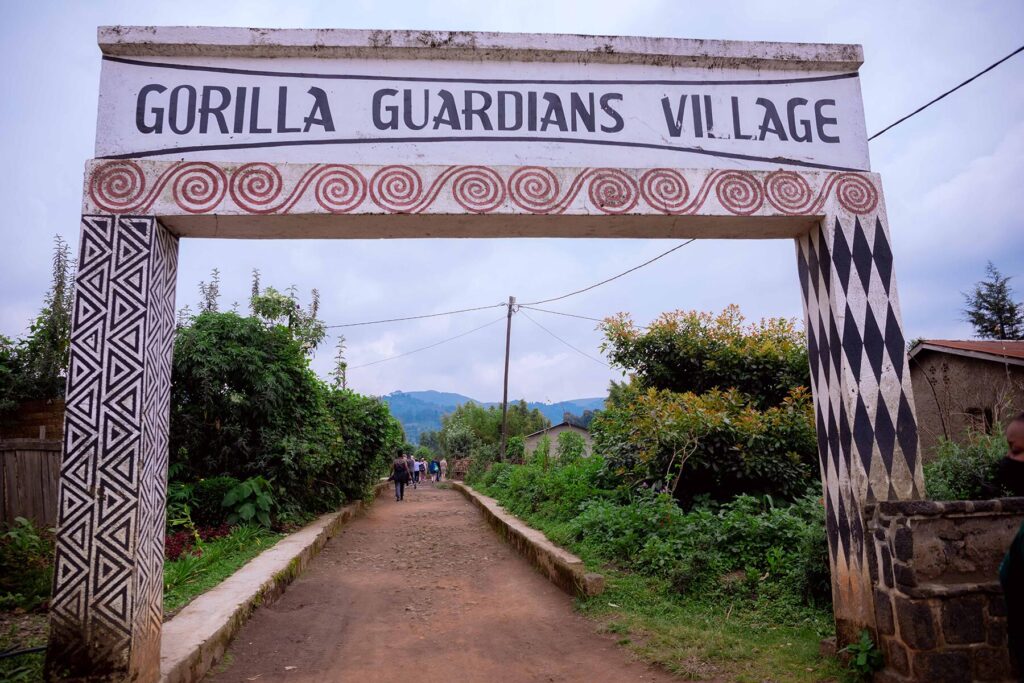
Most gorilla trekking itineraries in Rwanda list a “cultural village visit” as an optional add-on, and a fair number of travelers skip it, assuming it will be a generic souvenir stop bundled in to fill an afternoon. Gorilla Guardians Village, formerly known as the Iby’Iwacu Cultural Village, is a genuine exception to that assumption, and it is worth understanding what makes it different before deciding whether to skip it.
This guide explains what the village actually is, who runs it, what a visit involves hour by hour, what it costs, and how it fits into a well-paced Volcanoes National Park itinerary.
Should You Add This to Your Rwanda Itinerary?
Short answer: yes, particularly if you have a spare afternoon before or after your gorilla trek, because it adds meaningful context to the conservation story you have just paid a significant permit fee to experience.
A gorilla trek itself, however extraordinary, is a fairly narrow window into the full picture of mountain gorilla conservation: one hour with a habituated family, guided by rangers, with limited opportunity to ask about the human side of how that protection actually happens on the ground.
A visit to Gorilla Guardians Village fills in exactly that gap, connecting the trek you just did to the community and history that made it possible, including a direct conversation with men who once hunted the animals you were just watching. For many guests, it turns out to be the part of the trip that lingers longest, precisely because it is the one activity on the itinerary built around conversation rather than observation.
Why This Village Is Different From a Standard Cultural Stop
Rwanda’s tourism sector has, understandably, developed a fair number of generic cultural stops designed primarily to fill time between wildlife activities, and experienced travelers can often tell the difference within the first few minutes of arriving somewhere.
The village was founded specifically by former poachers who operated in the forests now protected as Volcanoes National Park, many of whom hunted for subsistence or sold bushmeat and animal parts before conservation programs offered them an alternative livelihood.
This origin story is not a marketing narrative layered on afterward; it is the actual founding premise of the organization, and the people demonstrating traditional hunting techniques, dances, and daily life during your visit are, in a meaningful number of cases, the same individuals or their direct family members who once worked against the very conservation effort your gorilla permit now funds.
This distinction matters because it changes what you are actually learning during the visit. Rather than a generalized, staged version of “Rwandan culture” performed for tourists, you are hearing a specific, honest account of how conservation economics actually shifted local behavior, from poaching driven by poverty and lack of alternatives to guiding, park employment, and tourism-linked income that now makes protecting gorillas more valuable to the community than hunting them ever was.
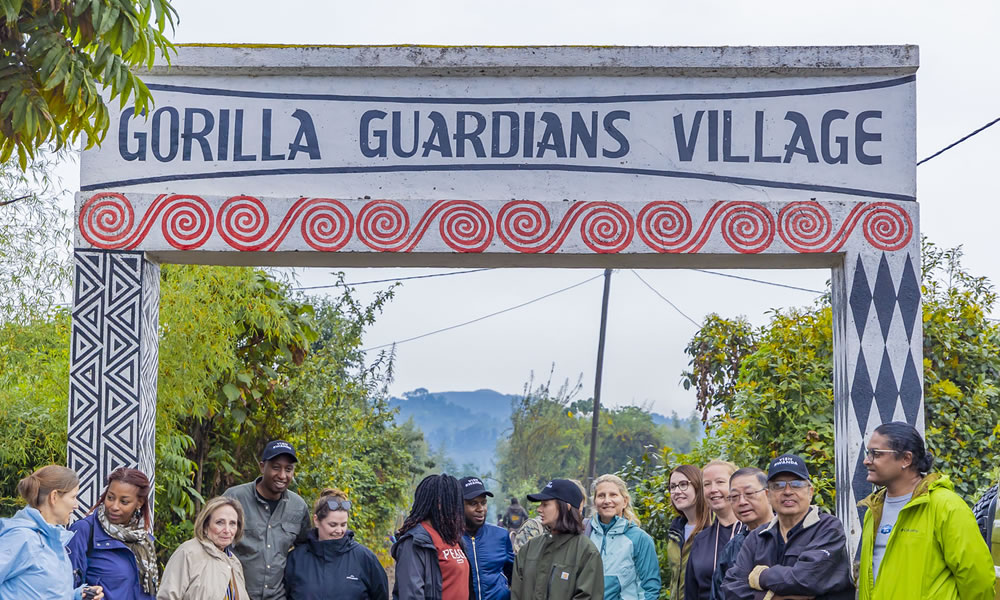
Where the Village Is Located
Gorilla Guardians Village sits close to Kinigi, the small town that serves as the main gateway to Volcanoes National Park, making it easily accessible from the same lodges most gorilla trekking guests already use as their base. Most itineraries schedule the visit either the afternoon before a morning trek or the afternoon after, since trekking itself typically wraps up by early afternoon, leaving genuine free time in the schedule that a village visit fills naturally rather than requiring an extra overnight.
When to Visit
The village operates year-round regardless of gorilla trekking season, since the experience takes place in an open community setting rather than depending on forest access or wildlife movement. Most guests simply slot it into whichever day of their itinerary has a free afternoon, commonly the arrival day before trekking or the departure day afterward.
What a Visit Actually Involves
A typical visit runs two to three hours and moves through several distinct segments rather than a single generic performance.
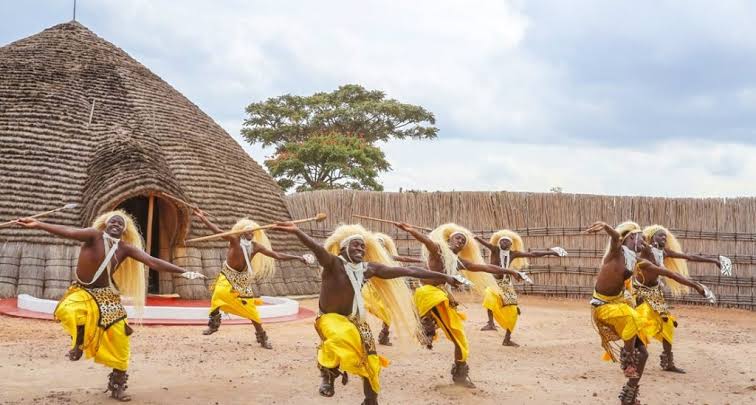
- Traditional dance and music performance: Intore dancers perform energetic traditional Rwandan dance, often with direct audience participation encouraged rather than a purely passive viewing experience.
- Demonstration of traditional hunting and gathering techniques: former poachers demonstrate the actual snare-setting, tracking, and bow-hunting methods once used in the forest, explained candidly in terms of why these methods were used and what has replaced that income source.
- Traditional healer and medicine demonstration: a local healer explains traditional plant-based remedies still used within the community alongside modern healthcare.
- Banana beer brewing demonstration: guests can see, and usually taste, the traditional brewing process still practiced locally.
- Mock traditional wedding ceremony: a lighthearted, often guest-involving recreation of a traditional Rwandan wedding, including traditional dress.
- King’s palace replica: a recreation of a traditional royal homestead, explaining pre-colonial Rwandan social structure and history.
What It Costs
| Component | Approximate Cost | Notes |
| Entry fee | $30 to $50 per person | Varies slightly by operator and current pricing |
| Transport from your lodge | Often included in your safari package | Confirm with your operator whether this is bundled or separate. |
| Optional additional donations | Guest discretion | Some guests choose to purchase locally made crafts directly, supporting artisans directly. |
This is genuinely inexpensive relative to almost anything else on a Rwanda gorilla trekking itinerary, and the fee structure is designed specifically to fund community development directly, including school support and healthcare access for the surrounding villages, rather than flowing through a larger commercial operator first.
How This Fits the Broader Conservation Story
Rwanda’s approach to mountain gorilla conservation is frequently cited as a model precisely because it treats community economics as central to conservation success, not a side project.
The revenue-sharing program tied to Volcanoes National Park directs a meaningful percentage of park revenue toward community infrastructure projects in villages bordering the park, and Gorilla Guardians Village represents the same philosophy operating at a grassroots, community-run level rather than through government allocation alone.
Practical implication: understanding this context before or after your trek gives the permit fee you paid a fuller meaning, connecting the abstract conservation funding explanation to an actual, visible community outcome you can see and speak with directly.
The History Behind the Transition
Understanding why former poachers became conservation guides requires a bit of background on how gorilla conservation actually developed in Rwanda. Through the 1970s and 1980s, communities living around the Virunga forests had few legal economic options tied to the park, and hunting, whether for bushmeat, traditional medicine ingredients, or the illegal wildlife trade, was a genuine, if illegal, source of income for some households.
Early conservation efforts focused purely on enforcement, more rangers, tougher penalties, and stricter boundaries, reduced poaching somewhat but did not eliminate the underlying economic pressure driving it.
The shift toward revenue-sharing and alternative livelihood programs in the 1990s and 2000s changed that calculation meaningfully. As gorilla trekking tourism grew and government policy began directing a genuine share of park revenue back into surrounding communities, working with the park, as a guide, a porter, a craftsperson, or a cultural educator, became a more reliable and often better-paying option than hunting ever was.
Gorilla Guardians Village grew directly out of this shift, founded by former poachers who made that transition themselves and wanted to build a sustainable, community-owned way to share that story with visitors while generating ongoing income for the wider community.
This history is worth knowing before your visit because it reframes what might otherwise look like a simple cultural performance into something closer to a living case study in conservation economics, one that conservation organizations elsewhere in Africa have studied and tried to replicate with varying degrees of success.
Who Actually Benefits From Your Visit
It is worth being specific about where the money from your entry fee goes, since “supports the local community” can otherwise sound like a vague marketing claim rather than a concrete outcome.
- Performers and demonstrators: many are directly paid for their participation in dance, music, and demonstration segments, providing regular income tied to tourism rather than one-off payments.
- Community development projects: a portion of proceeds has historically supported local infrastructure, including contributions toward schools and healthcare access points serving surrounding villages.
- Artisan cooperatives: craft sales during the visit go largely direct to the individuals or small cooperatives who made the items, rather than through a larger retail markup chain.
- Ongoing program sustainability: entry fees fund the continued operation of the site itself, including maintaining the replica structures and training new community members to take part in demonstrations.
Comparing This to Uganda’s Batwa Experience
| Factor | Gorilla Guardians Village (Rwanda) | Batwa Cultural Experience (Uganda) |
| Core story | Former poachers transitioning to conservation | Batwa people’s displacement from the forest when Bwindi became a protected park |
| Location | Near Kinigi, Volcanoes National Park | Near Bwindi Impenetrable Forest, several sector options |
| Typical duration | 2 to 3 hours | 2 to 4 hours depending on the specific program chosen |
| Physical demand | Low, mostly stationary demonstrations | Low to moderate, some walking through forest trail sections |
| Best paired with | Gorilla trek at Volcanoes National Park | Gorilla trek at Bwindi, any sector |
Combining This With Other Kinigi-Area Activities
Because the village sits so close to the main Volcanoes National Park gateway, it combines easily with other regional activities without adding significant extra travel time.
- Dian Fossey Tomb hike: a moderate hike to the original Karisoke Research Center site and Fossey’s grave, appealing to travellers interested in gorilla conservation history.
- Golden monkey tracking: a lower-cost, less physically demanding primate tracking activity within the same park.
- Twin Lakes (Burera and Ruhondo) boat trip: a relaxed half-day activity for a change of pace from forest-based activities.
- Musanze Caves: volcanic lava tube caves a short drive from Kinigi, suited to travellers wanting a different kind of activity entirely.
Planning Advice
- Schedule the village visit for the afternoon after your gorilla trek, not before. Guests consistently report getting more out of the community conversation once they have actually completed the trek and have direct, fresh context for the discussion.
- Bring small denomination cash for craft purchases. Community-made items purchased directly at the village support artisans more directly than souvenirs bought elsewhere.
- Ask questions rather than staying passive. Guides and community members are generally happy to answer direct, honest questions about the transition from poaching to conservation work, and the visit is considerably more valuable as a conversation than as a performance you simply watch.
- Allow at least two and a half hours in your schedule. Rushing the visit to fit another activity the same afternoon undercuts the value of the slower, conversation-based segments.
- Combine with the Dian Fossey Tomb hike if you have a full extra day. The two activities together give a genuinely comprehensive picture of Volcanoes National Park’s conservation history from both the human and research perspectives.
Guests who add this stop consistently mention afterward that it changed how they thought about the trek itself, not because the dancing or demonstrations were unexpected, but because hearing a direct, first-person account of the shift from hunting to guiding put a human face on a conservation story that can otherwise feel abstract when it is only explained through park fee brochures and permit pricing tables.
Frequently Asked Questions
Is Gorilla Guardians Village worth it if I only have one full day at Volcanoes National Park?
If your one full day is entirely consumed by the gorilla trek itself, which often runs from early morning until early afternoon, a village visit may need to be added on a second day or skipped in favour of rest. We generally recommend at least a day and a half at Volcanoes National Park to fit both comfortably.
Is this the same as the old Iby’Iwacu Cultural Village?
Yes, the organisation rebranded to Gorilla Guardians Village in recent years, though it operates on the same founding premise and community model as the original Iby’Iwacu project.
Can children visit the village?
Yes, and unlike gorilla trekking, there is no minimum age restriction, making it a good family-friendly activity to pair with a trek that only some family members may be doing.
Do the proceeds genuinely go to the local community?
Yes, this is a community-run and community-benefiting organisation, distinct from a purely commercial tourist attraction, and it is one of the more transparent examples of tourism revenue flowing directly to a local population in the region.
How does this compare to cultural village visits near Bwindi in Uganda?
Uganda’s equivalent experiences, such as the Batwa cultural encounters near Bwindi, follow a similar community-benefit model but centre on a different community and history, the Batwa people’s displacement from the forest rather than a poacher-to-guardian transition. Both are worthwhile for similar reasons but tell genuinely different stories.
Is the visit conducted in English?
Yes, guides and community representatives typically conduct the visit in English, French, or Kinyarwanda depending on your group’s preference, with translation support provided as needed for the demonstration segments.
Making Room for This in Your Itinerary
Gorilla Guardians Village is one of the few “optional” add-ons on a Rwanda gorilla trekking itinerary that we would actively discourage guests from skipping, given how directly it connects to the conservation story your permit fee is already funding, and how reasonably priced it is relative to everything else on a Rwanda trip.
It also gives a valuable half day of lower-intensity activity to balance a trip otherwise built around early mornings and physically demanding treks.