Birding Safaris in Akagera National Park: A Complete Guide; Akagera National Park is best known to most visitors for its Big Five wildlife, but for birders it holds an entirely separate reputation as one of the finest birding destinations in East Africa. With more than 525 recorded species packed into 1,122 square kilometers, Akagera sits at an unusual biogeographic crossroads, where East African savannah grassland, Zambezian miombo woodland and the largest wetland system in central Africa all converge, drawing species from several distinct African bird biomes into a single, accessible park.
Around 100 of these species are found nowhere else in Rwanda, and the park’s papyrus swamps and lake system hold some of the rarest and most sought-after birds on any East African birder’s list, including the near-mythical shoebill stork.
This guide covers Akagera’s birding specifically: which habitats hold which species, where within the park to focus your time, the specific birds most worth prioritizing, and how to combine birding with the park’s other signature activities, including the game drives, the Lake Ihema boat cruise, and Lake Shakani. It’s written for birders planning a dedicated birding-focused visit, as well as for general wildlife travellers who want to make the most of Akagera’s exceptional but often underappreciated avian diversity.
Is Akagera worth visiting specifically for birding?
Yes, and Akagera’s birding credentials stand on their merits independent of the Big Five wildlife most visitors come for. The park is recognized as an Important Bird Area by BirdLife International, and it’s widely considered Rwanda’s second most significant birding destination after Nyungwe Forest, with the two parks complementing each other well since most of Rwanda’s recorded bird species can be found in one or the other.
Akagera’s specific strength is its wetland system, the largest in central Africa, which holds papyrus-restricted specialists found in very few other locations, alongside strong savannah and woodland birding across its drier habitats.
For dedicated birders, a visit focused on Akagera’s habitat diversity, rather than just an add-on to game drives, pays off with an exceptional species count.
For general wildlife travellers who are not specifically birders, even a little attention to the park’s birdlife during standard game drives and the Lake Ihema boat cruise adds real value, since many of Akagera’s most spectacular species, such as the lilac-breasted roller, the African fish eagle, and various storks and herons, are visually striking enough to appeal to a wide audience, not just dedicated birders.
Why Akagera Is an Exceptional Birding Destination
Akagera’s birding significance comes down to geography. The park is located where several of Africa’s major bird biomes meet: the East African savannah grasslands, the Zambezian miombo woodland usually found much further south, the Guinea-Congo forest biome typically found in Central Africa, and the Afrotropical highlands biome linked to Rwanda’s mountain regions.
This convergence means Akagera has species whose range limits reach their northern or southern extremes here, species you simply won’t find together in this combination anywhere else in East Africa, along with seven Afrotropical highlands biome species and Guinea-Congo forest biome representatives that add further diversity to the park’s savannah and wetland core.
The park’s wetland system is the single most significant birding asset. Fed by the meandering Kagera River as it drains toward Lake Victoria, Akagera’s dozen or so lakes and their surrounding papyrus swamps form the largest protected wetland complex in central Africa, and this habitat supports the park’s most celebrated specialty birds.
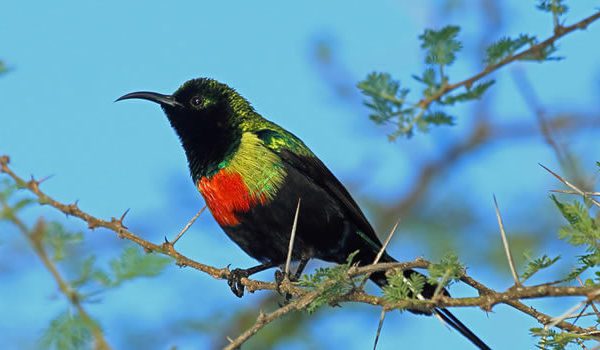
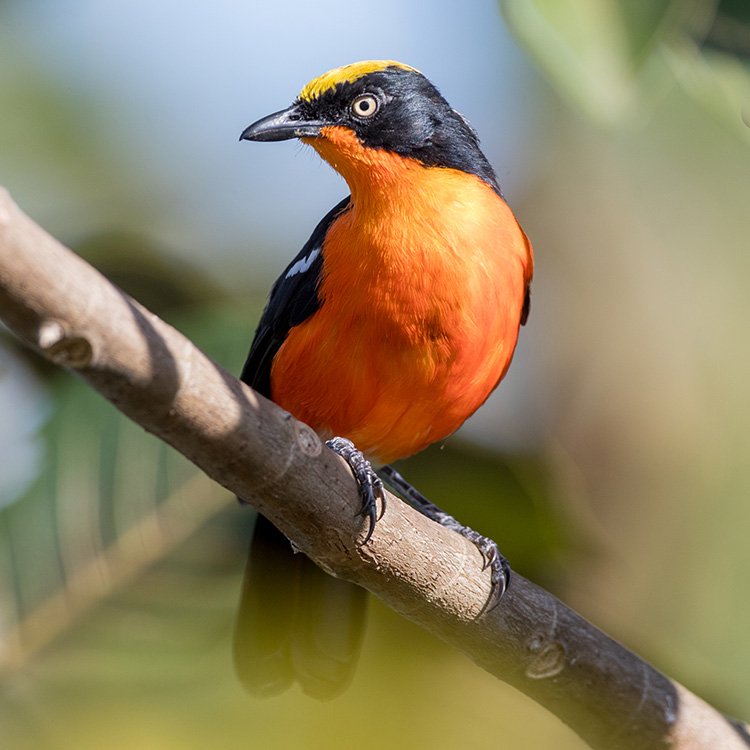
The papyrus gonolek, a strikingly patterned black, red and yellow bushshrike restricted to papyrus habitat and found in very few locations globally, is one of the clearest examples, alongside the white-winged swamp warbler, blue-headed coucal, blue-breasted bee-eater, and lesser jacana, all part of a select group of Lake Victoria Biome restricted species that draw specialist birders specifically to Akagera’s wetlands.
The shoebill stork deserves particular mention as the single most sought-after species in the park. This bizarre and prehistoric-looking bird, with its massive hooked bill and stork-like but distinctly ungainly structure, inhabits the deepest papyrus swamps and marshes, feeding primarily on lungfish but also taking frogs, snails and even small crocodiles.
Shoebill pairs are most often reported from the park’s northern sector, and sightings, while possible, remain uncommon enough that most birding guides frame a shoebill encounter as an exceptional highlight rather than a reliable expectation, however dedicated the search.
Akagera’s Key Bird Habitats at a Glance
Understanding which habitat holds which species is the foundation of productive birding within the park.
| Habitat | Location | Key Species | Best Access Method |
| Papyrus swamps and wetlands | Lake Ihema shoreline, northern sector marshes | Shoebill stork, papyrus gonolek, white-winged swamp warbler, African finfoot | Lake Ihema boat cruise; guided riverside walks |
| Open lake water | Lake Ihema, Lake Shakani, breeding islands | African fish eagle, pelicans, cormorants, darters, storks, herons | Boat cruise |
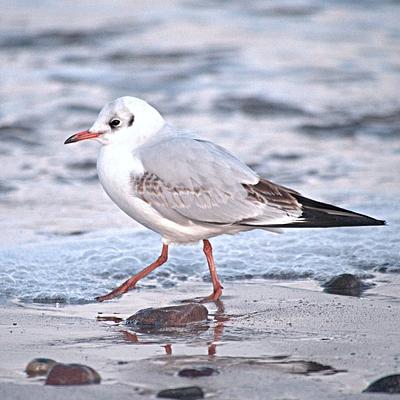
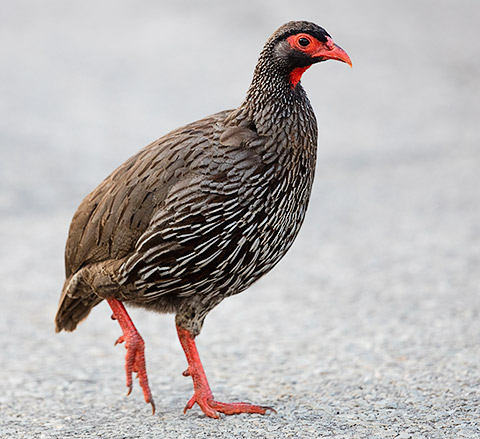
| Kilala Plains grassland | Northern sector | Red-faced barbets, black-headed gulls, raptors, larks, lapwings, coqui francolin | Game drive, guided walking safari |
| Acacia woodland and hillsides | Throughout the park, especially the southern sector | Lilac-breasted roller, crested barbet, Souza’s shrike, Arnot’s chat, ring-necked francolin | Game drive |
| Miombo woodland | Southern sector broad-leafed hillsides | Tabora Cisticola, Southern Black Flycatcher, Miombo Wren Warbler, Ruaha Chat | Game drive, walking with a specialist guide |
Best Birding Locations Within Akagera
What follows covers the specific areas within Akagera worth prioritizing for birding and what each delivers.
Lake Ihema and the Boat Cruise
The boat cruise on Lake Ihema is widely regarded as the single best birding activity in Akagera, and most experienced guides consider it essential for any serious birding visit. The cruise reaches parts of the lake and its papyrus fringe that no road can access, and a small island within the lake serves as a major breeding ground, holding extraordinary concentrations of cormorants, darters, herons, ibises and African openbills.
Along the papyrus-lined shores, the boat gives access to Lake Victoria biome specialists, including the papyrus gonolek, white-winged swamp warbler, blue-headed coucal and marsh tchagra, while open water species, including the African fish eagle, pink-backed pelican, saddle-billed stork, malachite and pied kingfisher, and the spur-winged goose, are all regularly encountered. The elusive African finfoot, a difficult species to see well in most of its range, is a realistic possibility on the Ihema cruise specifically. Scheduled departures run at 7:30am, 9am, 3pm, and 4:30pm daily.
Kilala Plains
The Kilala Plains, in Akagera’s northern sector, offer rolling grassland and wetland-edge habitat that supports an excellent range of open-country species alongside the area’s characteristic wildlife sightings. Collared pratincole, rufous-naped and flappet lark, red-capped lark, long-billed and grassland pipit, Kittlitz’s plover, Senegal and wattled lapwing, yellow-throated longclaw, southern red bishop, and both Hildebrandt’s spurfowl and coqui and crested francolin are all realistic targets here, making Kilala one of the strongest single areas in the park for grassland and raptor species specifically. Shoebill pairs are also more frequently reported from the park’s northern sector generally, adding further motivation to prioritize time here for birders specifically hoping for this species.
The Southern Sector Woodlands
Akagera’s southern sector, with its broad-leafed wooded hillsides, gives access to a distinct set of Zambezian and miombo-associated species at the northern edge of their range, including Tabora Cisticola, Southern Black Flycatcher, Miombo Wren Warbler, Souza’s Shrike, Ruaha Chat and the localized Red-faced Barbet, an East African endemic that’s a specific highlight for visiting birders. This area also holds good butterfly diversity alongside its birdlife, and several guides note it as more rewarding for a broader range of species than the northern sector, which tends to favor larger, more open-country specialists.
The Road Between the Southern Entrance and Hippo Viewpoint
The stretch of road between Akagera’s southern entrance and the Hippo Viewpoint is specifically recommended by experienced guides as excellent birding territory even before formally beginning a game drive circuit, since the wetlands near the southern entrance provide productive habitat that shouldn’t be overlooked simply because it’s close to the park boundary. Driving this section slowly, rather than treating it purely as transit to the main circuit, meaningfully improves the day’s overall species count.
Lake Shakani
While Lake Shakani is primarily known as Akagera’s dedicated sport fishing lake, its papyrus fringe and marsh vegetation also support a solid range of wetland species, including black-headed goliath, African jacana, squacco heron, common moorhen, open-billed stork and long-toed lapwing. A birding stop at Shakani, whether combined with fishing or as a standalone visit, adds a further wetland location to a birding-focused Akagera itinerary beyond the more heavily visited Lake Ihema.
Best Time for Birding in Akagera
Akagera’s birdlife is rewarding year-round, but the two main seasons offer different birding experiences rather than one being simply better than the other. The dry season from June through September is best for francolins, a wide range of marsh species, nightjars and owls, with thinned vegetation improving visibility and firm trails making game drives and walks more comfortable.
The wetter months, particularly from November through April, bring Palearctic migrants, including the lesser kestrel, great snipe and black-winged pratincole, into the park, alongside a breeding season for herons, cormorants and storks that runs roughly from February through July, producing vibrant breeding displays at the lake’s colonial nesting sites. Many experienced Akagera birding guides consider the wetter months to offer the highest overall species diversity, given the addition of migrants to the resident population, even though the drier months are more comfortable for general logistics.
| Season | Months | Birding Highlights | Conditions |
| Long dry season | June – September | Francolin, marsh species, nightjars, and owls are active. | Warm days (25-30°C), cool nights, firm trails |
| Short dry season | December – February | Good general birding; overlaps with early migrant arrivals | Warm and dry |
| Migrant season | November – April | Palearctic migrants (lesser kestrel, great snipe, black-winged pratincole) | Wetter; 4×4 recommended on some trails |
| Breeding season | February – July | Vibrant breeding displays from herons, cormorants and storks at colonial nest sites | Variable; overlaps both dry and wet periods |
What Does a Birding Safari in Akagera Cost?
Birding in Akagera is charged as its own specific activity in addition to standard park entry fees, with a typical cost around USD 50 per person per day for a dedicated birding guide and activity, best combined with a standard game drive or the Lake Ihema boat cruise rather than treated as an entirely separate outing. The boat cruise itself, essential for the park’s best wetland and papyrus birding, carries its own fee, typically around USD 35 per adult for the standard scheduled departures.
For serious birders, arranging a specialist birding guide, rather than a general wildlife guide with incidental bird knowledge, is worth the additional coordination, since a guide specifically experienced in bird identification by call and behavior will produce a significantly stronger species count than a general safari guide, however competent, whose primary focus is typically the Big Five.
Birding combined with a standard game drive—park entry plus vehicle and guide costs
General wildlife travellers can add meaningful birding value to a standard game drive simply by carrying binoculars and asking their guide to point out and identify bird species alongside the primary Big Five focus, without any additional specialist activity fee.
Dedicated birding activity with a specialist guide—standard entry plus a specific birding guide fee (~USD 50/day)
Arranging a specialist birding guide for a dedicated birding-focused day, potentially including a walking component in areas where this is permitted alongside standard game drives, gives considerably better species identification and location knowledge than a general safari guide.
Comprehensive birding circuit with Lake Ihema cruise—entry, specialist guide fee, and boat cruise fee
Combining a specialist birding guide with the Lake Ihema boat cruise, essential for the park’s wetland specialists and the best shot at species like the African finfoot, gives the most comprehensive single-visit birding experience Akagera can offer.
Where to Stay for the Best Birding Access
Akagera’s accommodation is concentrated in the southern sector near the main entrance, giving good access to the southern woodland birding and reasonable proximity to Lake Ihema for the boat cruise. Birders specifically prioritizing the northern Kilala Plains and the areas where shoebill sightings are more frequently reported may find a property closer to or within the northern sector more convenient, though options here are more limited.
| Property | Location | Best For |
| Magashi Safari Camp | Northern sector | Birders prioritizing the Kilala Plains and northern shoebill territory |
| Ruzizi Tented Camp | Southern sector, near Lake Ihema | Convenient access to the boat cruise and southern woodland birding |
| Mantis Akagera Game Lodge | Southern sector | Comfortable base with good access to the main circuits and Lake Ihema |
| Karenge Bush Camp | Central/northern sector | Travellers wanting a more remote base closer to the northern plains |
| Shakani, Muyumba and Mutumba campsites | Southern sector | Budget-conscious birders and self-drive travellers |
How to Get the Most from Birding in Akagera
Beyond simply visiting the right locations, several specific approaches improve your birding results within the park.
Prioritize the Lake Ihema Boat Cruise.
If you take only one dedicated birding activity in Akagera, the Lake Ihema boat cruise should be it, given its unique access to papyrus and open-water species that road-based game drives simply cannot reach and the breeding island’s remarkable concentration of nesting waterbirds. Booking an early departure, ideally the 7:30am slot, gives the best combination of bird activity and comfortable temperatures.
Drive Slowly Through Wetland-Adjacent Sections
The stretch of road between the southern entrance and the Hippo Viewpoint, along with other wetland-adjacent sections of the park’s main circuits, rewards a slow pace rather than treating these areas as transit between more celebrated game drive stops. Many of Akagera’s best incidental bird sightings happen in these overlooked corridor sections precisely because most visitors drive through them quickly.
Arrange a Specialist Birding Guide
A guide with bird identification expertise, including the ability to identify species by call, makes a substantial difference to your overall species count compared with a general wildlife guide whose primary training is Big Five focused. Requesting a birding specialist specifically when booking your visit, rather than assuming any guide will have this depth of knowledge, is worth the advance coordination.
Target the Northern Sector for Shoebill Attempts
While no location in Akagera guarantees a shoebill sighting, the northern sector’s deeper marshes and papyrus swamps are where pairs are most frequently reported, and birders specifically prioritizing this species should factor a northern sector visit or an extended stay at a northern-based camp into their itinerary, alongside realistic expectations that this remains an exceptional rather than routine sighting.
Bring the Right Equipment
A good pair of binoculars is essential rather than optional for productive Akagera birding, given the distances involved in open savannah and lake viewing. A camera with a moderate to long telephoto lens helps document species for later identification, particularly useful for the more localized specialists like the papyrus gonolek and red-faced barbet that reward a closer look than binoculars alone provide. A field guide or bird checklist specific to Rwanda or East Africa is worth carrying for on-the-spot identification and record-keeping.
| Strategy | Best For | Key Location |
| Lake Ihema boat cruise (early departure) | Wetland and open-water specialists, breeding colonies | Lake Ihema |
| Slow driving through wetland corridors | Incidental high-quality sightings are often missed by faster transit. | Southern entrance to Hippo Viewpoint |
| Specialist birding guide | Overall species count and accurate identification by call | Park-wide |
| Extended northern sector time | Shoebill stork attempts | Kilala Plains and northern marshes |
| Quality binoculars and telephoto camera | Distant savannah sightings and close identification of localized specialists | Park-wide |
Planning a Birding-Focused Visit to Akagera
For dedicated birders, two to three nights in the park allows time to properly cover both the northern Kilala Plains and southern woodland habitats, along with at least one, ideally two, Lake Ihema boat cruises at different times of day to maximize the range of species encountered on the water. A single day, while still productive, forces a choice between the northern and southern habitats rather than allowing both to be covered properly.
Combining Akagera with Nyungwe Forest, Rwanda’s most significant birding destination overall, gives the most comprehensive single-trip coverage of the country’s bird diversity, since the two parks’ habitats and species lists complement each other closely, with Akagera’s savannah, woodland and wetland specialists rounding out Nyungwe’s montane forest strengths.
A few practical notes: pack binoculars, a bird checklist or field guide, a camera with a reasonable telephoto capability, sun protection, insect repellent and appropriate clothing for both open savannah heat and cooler early mornings on the water. Confirm current activity fees and boat cruise departure times with your operator or the park directly before your visit, since these details are reviewed periodically.
Birding Priorities by Traveller Type
Here is a direct guide to structuring an Akagera visit around specific birding priorities.
| Priority | Recommended Approach | Why |
| Shoebill stork specifically | Northern sector focus, extended stay, specialist guide | Most frequently reported in the north; requires patience and expert positioning |
| Maximum overall species count | 2-3 nights covering both north and south, plus 2 boat cruises | Covers the full range of habitats and their respective specialists |
| General wildlife traveller with casual birding interest | Binoculars during standard game drives plus one Ihema cruise | Adds meaningful birding value without a dedicated specialist itinerary |
| Comprehensive Rwanda birding circuit | Combine Akagera with Nyungwe Forest. | The two parks together cover the vast majority of Rwanda’s recorded species. |
| Photography-focused birding | Southern woodland for localized species, Ihema cruise for waterbirds | The southern sector gives closer encounters with photogenic species like the lilac-breasted roller. |
Frequently Asked Questions
How many bird species are in Akagera National Park?
Over 525 species have been recorded in Akagera, with roughly 100 of these not found in any other protected area in Rwanda. This diversity reflects the park’s position at the confluence of several major African bird biomes, combining savannah, woodland and the largest wetland system in central Africa within a single park.
Can you see the shoebill stork in Akagera?
It’s possible but uncommon. Shoebill pairs are most frequently reported in the park’s northern sector, inhabiting deep papyrus swamps and marshes, and while sightings do happen, most experienced guides frame a shoebill encounter as an exceptional highlight rather than a reliable expectation, even with dedicated searching and a specialist guide.
What is the best activity for birding in Akagera?
The Lake Ihema boat cruise is widely regarded as the single best birding activity in the park, giving access to papyrus swamp specialists and open-water species that road-based game drives can’t reach, along with a breeding island holding extraordinary concentrations of nesting waterbirds.
What is the papyrus gonolek and why is it significant?
The papyrus gonolek is a strikingly patterned black, red and yellow bushshrike restricted specifically to papyrus habitat, one of a small number of Lake Victoria Biome restricted specialists found in Akagera’s wetlands. Its rarity and specific habitat requirement make it one of the park’s most sought-after species among visiting birders.
When is the best time for birding in Akagera?
Birding is rewarding year-round, but the two seasons offer different experiences. The dry season from June through September is best for francolins, marsh species, nightjars and owls, with easier logistics. The wetter months from November through April bring Palearctic migrants and a breeding season for herons, cormorants and storks, and many experienced guides consider this period to offer the highest overall species diversity.
Do I need a specialist guide for birding in Akagera?
Not strictly necessary, but strongly recommended for serious birders. A specialist guide with strong bird identification skills, including recognition by call, will produce a considerably higher species count than a general wildlife guide whose primary focus is typically the Big Five. Requesting this specifically when booking is worthwhile.
How does Akagera compare to Nyungwe Forest for birding?
The two parks are considered complementary rather than competing, with Akagera holding the stronger savannah, woodland and wetland species list, and Nyungwe holding the country’s strongest montane forest birding. Most of Rwanda’s recorded bird species can be found in one park or the other, and a combined visit gives the most comprehensive coverage of the country’s birdlife.