Why Is Gorilla Trekking So Expensive?
The first reaction most people have when they see gorilla trekking permit prices, $800 in Uganda, $1,500 in Rwanda, is a mix of surprise and mild suspicion. It looks like a lot of money for what is, on paper, a single hour spent watching an animal in a forest. We understand the reaction, and we would rather answer it directly than dance around it, because guests who understand exactly what that fee funds tend to feel far better about the expense once they are standing in the forest, not just after.
This article breaks down what actually makes up the cost of gorilla trekking, why Rwanda charges nearly double Uganda’s price for what looks like the same experience, whether the DR Congo option is a shortcut worth taking, and how to budget realistically for a trip built around it.
Should You Pay for Gorilla Trekking at All?
Short answer: yes, if a wild mountain gorilla encounter is on your list of things to do before you stop travelling, because there is no cheaper substitute that delivers the same experience.
There is no version of “budget gorilla trekking” the way there is a budget safari option, because permit pricing is fixed by national park authorities and applies identically whether you sleep in a $40 guesthouse or a $1,200-a-night luxury lodge. The permit is the floor cost of the experience, not a markup added by tour operators. Once you accept that the price is fixed regardless of how you organize the rest of the trip, the real decision becomes about which country’s permit fits your budget and travel plans, not whether to negotiate the fee down, because you cannot.
Why Gorilla Trekking Costs What It Does
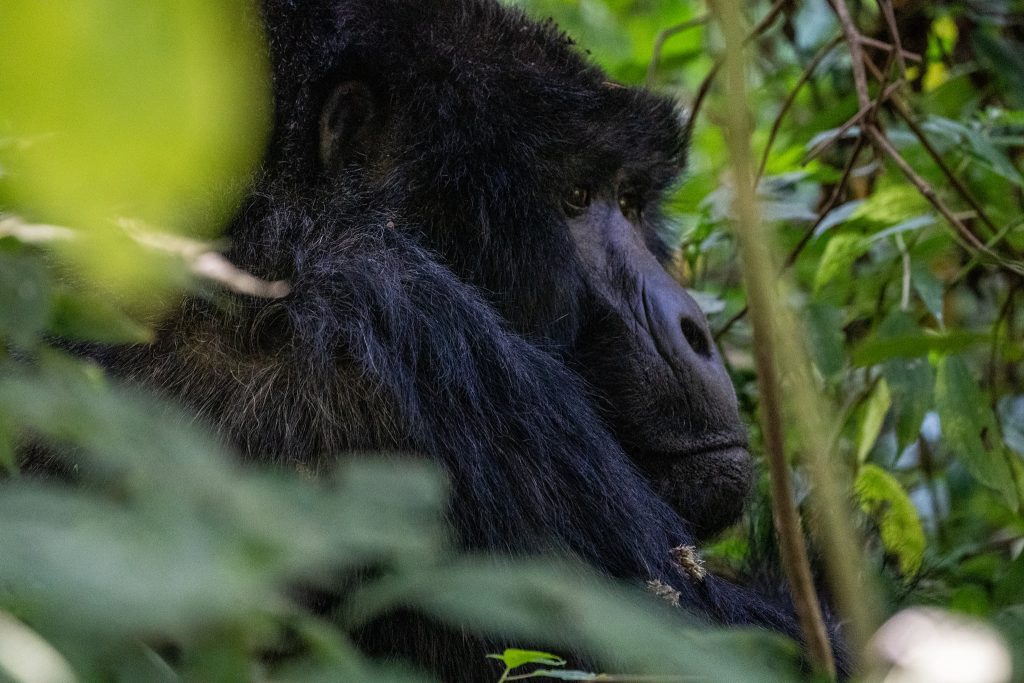
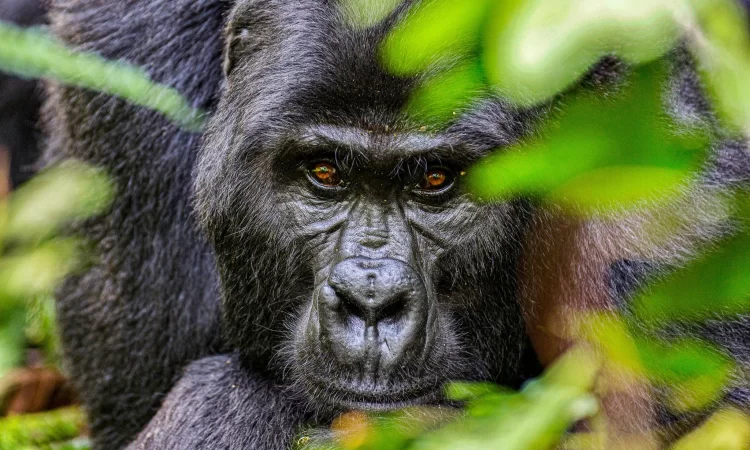
The honest answer is that mountain gorillas are one of the most expensive species on earth to protect, and the permit fee is essentially a direct pass-through of that protection cost onto the people who want to see the result of it. Mountain gorillas exist only in a small stretch of forest spanning Uganda, Rwanda, and DR Congo, with roughly 1,000 individuals total according to the most recent population census work, and every one of them needs daily ranger monitoring, veterinary oversight, and protection from poaching and habitat encroachment to stay alive. Unlike a lion or an elephant that can range across enormous protected areas with periodic patrols, habituated gorilla families are visited and monitored every single day, which is a labor-intensive conservation model.
Practical implication: you are not paying for an hour of viewing time. You are paying for a year-round conservation operation that happens to let a limited number of visitors witness its result each day.
Where the Permit Fee Actually Goes
Park authorities in all three countries publish general breakdowns of permit fee allocation, and while the exact percentages shift slightly year to year, the categories are consistent across the region.
| Allocation | What It Covers |
| Ranger salaries and patrols | Daily monitoring of habituated groups, anti-poaching patrols, snare removal |
| Veterinary care | Regular health checks on habituated gorillas, emergency intervention for injury or illness |
| Community revenue-sharing | Direct payments and development projects for villages bordering the parks |
| Research and monitoring | Population census work, behavioral studies, habituation of new family groups |
| Park infrastructure | Trail maintenance, ranger stations, equipment |
The community revenue-sharing piece deserves particular attention because it is central to why this conservation model has worked. Communities living alongside Bwindi and Volcanoes National Park receive a meaningful share of park revenue for schools, clinics, and roads, which gives local residents a direct financial stake in the gorillas’ survival rather than viewing the park purely as land taken away from farming or grazing. This is widely credited as one of the reasons mountain gorillas are the only great ape species with a growing wild population.
Why Rwanda Costs Nearly Double Uganda
| Country | Standard Permit Price | Positioning |
| Uganda | Approximately $800 | Value-oriented, shorter transfer times from Entebbe or Kigali |
| Rwanda | Approximately $1,500 | Premium-positioned, closer to Kigali International Airport, more luxury lodge options |
| DR Congo | Approximately $400 | Lowest cost, but requires careful security assessment before booking |
Rwanda made a deliberate strategic decision several years ago to position itself as a premium gorilla trekking destination rather than compete on price, and the permit fee reflects that positioning. Volcanoes National Park sits roughly two and a half hours from Kigali International Airport, which is a shorter and more comfortable transfer than reaching Bwindi from Entebbe, and Rwanda has built out a cluster of high-end lodges around the park to match the premium price point. Uganda’s lower fee reflects a different strategy, prioritizing volume and accessibility, with a wider range of budget and mid-range accommodation options around Bwindi’s four trekking sectors.
DR Congo’s Virunga National Park offers the lowest permit price by a wide margin, but this needs a clear-eyed conversation about the security situation in eastern DR Congo, which has experienced periods of instability affecting park access. We assess this on a case-by-case basis with current government travel advisories before recommending it to any guest, and it is not a decision to make purely on price.
What Else You Need to Budget For
The permit is the headline cost, but it is not the only cost, and travelers who budget only for the permit are often surprised by the total trip price.
- Park entry fees: separate from the trekking permit, charged per day for access to the national park itself.
- Porter fees: optional but strongly recommended, typically $15 to $20 per day, paid directly to a local community member who carries your daypack and helps you over difficult terrain.
- Accommodation: ranges from $50 a night at a basic guesthouse near the park gate to $1,000+ a night at an exclusive luxury lodge.
- Transport: road transfers from Entebbe to Bwindi take eight to nine hours by road, or roughly one hour by domestic charter flight, which adds meaningfully to the budget if chosen.
- Tips for rangers and trackers: not mandatory, but customary and appreciated given the physically demanding, low-paid work involved.
| Budget Level | Total Trip Cost (3 days, 1 permit, per person) | What’s Included |
| Budget | $900 to $1,300 | Uganda permit, basic guesthouse, shared vehicle transport |
| Mid-range | $1,600 to $2,500 | Uganda or Rwanda permit, comfortable ensuite lodge, private vehicle |
| Luxury | $3,000+ | Rwanda permit, exclusive lodge, private guide and vehicle, possible charter flight |
Is It Actually Worth the Money?
This is a fair question to ask honestly rather than dismiss. The comparison that helps most guests is to think about the permit not as an entrance ticket but as a conservation donation that happens to come with an extraordinary wildlife encounter attached. Very few tourism experiences anywhere in the world can point to a direct, measurable link between visitor fees and a species’ population recovery the way mountain gorilla trekking can. The population has grown from under 700 individuals in the early 2000s to roughly 1,000 today, an increase that conservation groups directly attribute to the revenue and protection this permit system funds.
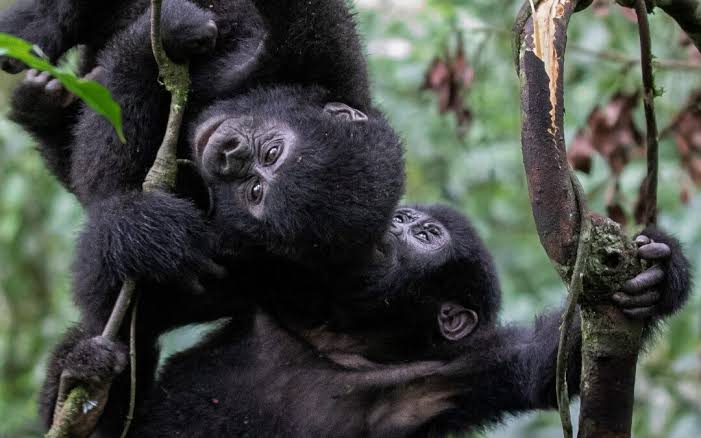
From a pure experience standpoint, the value proposition also holds up under scrutiny. An hour spent within a few meters of a wild silverback and his family, watching juveniles play and adults forage entirely undisturbed by your presence, is not an experience available anywhere else on the planet at any price. Guests who have done extensive African safaris consistently describe gorilla trekking, not a Big Five game drive, as the single most memorable moment of their trip.
How Permit Prices Have Changed Over Time
Gorilla permit prices have moved upward fairly steadily over the past decade across all three countries, and it helps to understand why rather than assume it is simple inflation. As tracking, veterinary care, and community programs have expanded, and as demand for permits has grown faster than the number of habituated gorilla families available to visit, park authorities have used pricing partly as a demand-management tool, keeping daily visitor numbers to a level the gorillas and the surrounding ecosystem can sustainably absorb. Each gorilla family can only host one group of a maximum of eight visitors per day, for exactly one hour, a rule that has not changed even as demand has grown, which naturally puts upward pressure on price rather than on visitor numbers.
This matters for planning because it means permit prices are unlikely to fall in the future, and booking earlier rather than later, especially if a price increase has already been announced for an upcoming year, is generally the better financial decision if your travel dates are flexible enough to move them forward.
Which Country Fits Your Budget and Priorities
| Traveler Priority | Best Fit | Why |
| Lowest cost per permit | Uganda | Roughly half of Rwanda’s permit price with a comparable trekking experience |
| Shortest airport transfer | Rwanda | Around two and a half hours from Kigali International Airport to Volcanoes National Park |
| Combining with gorilla trekking and other primates | Uganda | Chimpanzee trekking in Kibale and golden monkey tracking are both easily combined. |
| Maximum extended time with gorillas | Rwanda | Habituation experience permits allow up to four hours with a family, versus one hour on a standard permit. |
| Lowest possible price, accepting more risk assessment | DR Congo | Roughly half of Uganda’s permit price, subject to current security review |
Hidden Costs First-Time Trekkers Often Miss
Beyond the permit and the obvious accommodation and transport line items, a few smaller costs catch first-time trekkers off guard and are worth budgeting for upfront rather than discovering on the ground.
- Gear you don’t already own. Waterproof hiking boots, gardening gloves, and a rain jacket are necessary, not optional extras, and buying them just before the trip adds a real cost most people forget to budget for.
- Domestic flights between park regions. If your itinerary combines Bwindi with Kidepo or Murchison Falls, internal charter flights can add several hundred dollars per person compared with road transfers.
- Visa and yellow fever vaccination costs. These are trip-wide costs rather than gorilla-trekking-specific, but they land in the same budget conversation for most first-time East Africa visitors.
-

Gorilla A second permit as a buffer. Some guests, particularly serious photographers, choose to book two consecutive trekking days to improve their odds of favorable lighting, weather, or gorilla behavior, effectively doubling the permit cost.
Planning Advice to Get the Best Value
- Book your permit as early as possible. Peak season permits, especially in Rwanda, sell out months in advance, and last-minute availability is rare.
- Consider Uganda if budget matters more than convenience. The savings on the permit alone, roughly $700 per person, often outweighs the extra travel time compared with Rwanda.
- Ask about permit discounts for East African residents and nationals. Uganda and Rwanda both offer significantly reduced rates for citizens and residents of East African Community countries.
- Combine your permit with other activities to spread the cost feeling. A single high permit cost feels less concentrated within a longer, multi-activity itinerary than as a standalone day trip.
- Avoid booking through unlicensed resellers. Permits should always be purchased through a licensed tour operator or directly through the relevant park authority to guarantee validity.
Frequently Asked Questions
Can I negotiate the gorilla permit price?
No. Permit prices are set by national governments and cannot be discounted or negotiated by tour operators.
Is Uganda’s gorilla trekking experience lower quality than Rwanda’s because it costs less?
No, the wildlife experience itself, time with a habituated gorilla family, is comparable across both countries. The price difference reflects positioning, accessibility, and the surrounding lodge infrastructure rather than the quality of the trek itself.
What happens if I don’t see gorillas on my trek?
This is extremely rare given daily ranger tracking of each habituated family, but Uganda and Rwanda both offer a partial refund or a follow-up trek in the unlikely event a group cannot be located, following operator-specific policy.
Do children pay the same permit price?
Gorilla trekking has a minimum age of 15 in all three countries, so this rarely comes up, but where permitted for older teenagers, the same adult pricing applies.
Is gorilla habituation experience pricing different from standard trekking?
Yes. Rwanda’s habituation experience, which allows up to four hours with a gorilla family that is still in the process of becoming accustomed to human presence, is priced separately and typically higher than the standard one-hour trekking permit.
Does the permit price include park entry and accommodation?
No. The permit only covers the trekking activity itself. Park entry fees, accommodation, meals, and transport are all separate costs layered on top of the permit price.
Is it cheaper to book gorilla trekking directly with the park authority instead of a tour operator?
The permit price itself is identical whether booked directly or through an operator, since it is fixed by the government. Booking through an established operator typically adds value through itinerary planning, transport logistics, and lodge selection rather than adding a markup to the permit itself.
Making Sense of the Cost
Gorilla trekking is expensive because protecting an endangered great ape species at this level of intensity costs that much, and because the fee structure has been deliberately designed to fund the exact conservation work that keeps the experience possible for future travellers at all. Once you see the fee as inseparable from the outcome it produces, the price becomes easier to accept as reasonable rather than inflated.