Budget Primate Safari in Uganda 2026/2027
“Budget” and “gorilla trekking” feel like they should not belong in the same sentence, given a single permit costs around $800. That reaction is fair, but it misunderstands where the real savings and real costs sit in a primate safari in Uganda.
The permit price is fixed no matter what, but almost everything else around it, accommodation, transport, which primates you add on, how many trekking days you book, is flexible, and small decisions here can shift your total trip cost by hundreds or even over a thousand dollars per person.
This guide is built specifically around 2026/2027 planning, since permit pricing and a few policy details have shifted recently, and lays out exactly how to build the most cost-effective primate safari Uganda can offer without cutting corners on the experience itself.
Should You Attempt a Budget Primate Safari?
Short answer: yes, Uganda is the most cost-effective country for primate trekking in the region, and a well-planned budget trip does not mean a lesser experience, since the permit itself, the actual encounter with gorillas or chimpanzees, is identical regardless of what you spend on accommodation around it.
The mistake to avoid is assuming “budget” means cutting the permit itself or skipping porters to save money. Those are the wrong places to economise. The right places are accommodation style, group versus private transport, and how many separate primate activities you bundle into one trip versus spreading across future visits.
A well-planned budget trip and an expensive one deliver an identical hour with the gorillas; the difference shows up entirely in the bed you sleep in and the vehicle you ride between parks, not in the wildlife encounter itself.
Why Uganda Is the Budget Leader for Primate Trekking
Anyone comparing East Africa’s three gorilla trekking countries purely on cost will land on Uganda quickly, but it is worth understanding exactly why the gap exists rather than treating it as an arbitrary pricing difference.
Uganda holds a clear price advantage over Rwanda for gorilla permits, roughly $800 versus $1,500, and is also the only one of the three gorilla trekking countries offering a accessible, well-developed chimpanzee trekking program alongside it in Kibale Forest National Park, at a fraction of the gorilla permit cost.
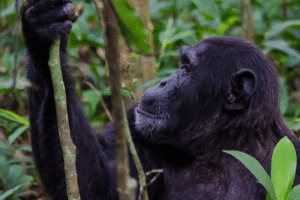
This combination, lower gorilla permit pricing plus an affordable second primate experience, is what makes Uganda the clear starting point for anyone building a primate-focused trip around a defined budget.
| Country | Gorilla Permit | Chimpanzee Permit | Combined Primate Trip Cost Advantage |
| Uganda | Approximately $800 | Approximately $200 | Lowest combined cost by a meaningful margin |
| Rwanda | Approximately $1,500 | Limited chimpanzee trekking availability | Higher cost, less primate variety |
| DR Congo | Approximately $400 | Limited availability, security-dependent | Lowest permit cost but requires current security assessment |
What’s Changed for 2026/2027 Planning
A few policy and pricing details specifically affect budget planning for trips booked into 2026 and 2027, and it is worth building your budget around current rather than outdated information.
*Uganda’s gorilla permit booking policy changed in 2026 to require full payment at the time of booking, removing the previously available option of a provisional hold with partial deposit. This affects cash flow planning for budget travellers who previously spread payments over a longer lead time. Rwanda’s habituation experience permit is confirmed to rise from $1,500 to $1,800 effective January 2027, though the standard one-hour trekking permit price has not been announced as changing at the same time. Always confirm current figures directly with us before finalising your budget, since these details are updated periodically by park authorities.*
The shift to full upfront payment in Uganda means budget travellers need to have permit funds ready earlier in the planning process than in previous years, which is worth factoring into your savings timeline if you are planning a 2026 or 2027 trip well in advance.
Where to Go for the Best Value
| Location | Primate Experience | Why It’s Budget-Friendly |
| Bwindi Impenetrable Forest | Gorilla trekking | Lower permit cost than Rwanda, wide range of budget accommodation near park gates |
| Mgahinga Gorilla National Park | Gorilla trekking | Fewer visitors, sometimes easier permit availability, similar pricing to Bwindi |
| Kibale Forest National Park | Chimpanzee trekking | Low permit cost, easily combined with Bwindi on one road route |
| Kalinzu Forest Reserve | Chimpanzee trekking (lower-cost alternative to Kibale) | Even more affordable permit, less crowded, slightly lower habituation success rate |
Kalinzu Forest Reserve is worth knowing about specifically for budget travellers, since it offers a lower-cost chimpanzee trekking permit than Kibale, positioned conveniently between Queen Elizabeth National Park and Bwindi on the standard southwestern Uganda circuit route, making it an easy, inexpensive add-on rather than a special detour.
When to Travel for the Best Value
| Season | Effect on Cost | Recommendation |
| March to May (long rains) | Lowest accommodation rates, permits unaffected | Best value window if you can tolerate wetter trekking conditions |
| November (short rains) | Reduced accommodation rates, moderate crowds | Good secondary value window |
| June to September, December to February (dry seasons) | Peak accommodation pricing, permits unaffected | Book well ahead if travelling in these windows on a budget |
Since permit prices do not change with season, the real budget lever tied to timing is accommodation pricing, which drops meaningfully during the wetter months. Budget travellers comfortable with muddier trekking conditions can save considerably on lodging by travelling in April or May specifically.
Building a Realistic Budget Itinerary
| Cost Item | Budget Estimate (per person) | Notes |
| Gorilla permit (Uganda) | $800 | Fixed, full payment required at booking |
| Chimpanzee permit (Kibale or Kalinzu) | $150 to $200 | Fixed, lower cost at Kalinzu |
| Budget accommodation (5 nights) | $250 to $400 | Guesthouses and budget campsites near park gates |
| Group vehicle transport | $400 to $700 for the trip | Shared vehicle, standard road transfers |
| Meals | $150 to $250 for the trip | Set-menu options at budget lodges |
| Porter fees | $15 to $20 per trek day | Optional but recommended for both treks |
| Park entry fees | $40 to $60 per day | Separate from trekking permits |
Where to Stay on a Budget
- Community-run guesthouses near Buhoma or Ruhija (Bwindi): simple, clean rooms, often family-run, typically $30 to $60 per night including breakfast.
- Public campsites inside or bordering the parks: the most affordable overnight option for travellers with their own or rented camping gear, often under $20 per night.
- Budget lodges near Kibale Forest: several established, affordable options near Fort Portal offer comfortable rooms without luxury pricing, generally $40 to $80 per night.
- Hostel-style dormitory options in Kasese or Fort Portal towns: the lowest-cost overnight option for backpacker-style travellers moving between parks independently.
How to Cut Costs Without Cutting the Experience
- Join a group trekking vehicle rather than booking a private vehicle. This is the single biggest lever for reducing per-person transport cost on a budget trip.
- Choose Kalinzu over Kibale for chimpanzee trekking if budget matters more than habituation reliability. Kalinzu’s permit is meaningfully cheaper, though sighting success rates run slightly lower than Kibale’s well-established habituated groups.
- Travel in the shoulder or wet season if your schedule allows. Accommodation savings here are real and do not affect permit cost or availability.
- Skip the gorilla habituation experience permit if budget is tight. The standard one-hour trekking permit delivers the core experience at a fraction of the habituation experience’s cost.
- Do not skip the porter fee to save money. At $15 to $20, this is one of the smallest line items in your entire budget and meaningfully affects both trek comfort and community income.
- Book both primate treks on the same broader trip rather than as separate future visits. International flight costs are the largest expense most travellers face, and spreading them across two trips rather than combining primates into one is rarely more economical.
A Sample 7-Day Budget Itinerary
Concrete numbers help more than abstract advice, so here is a realistic day-by-day structure that keeps costs down while still delivering both primate experiences properly.
- Day 1: Arrive Entebbe, overnight at a budget guesthouse near the airport to avoid a late-night onward drive.
- Day 2: Road transfer to Kibale Forest area (approximately 6 hours), overnight at a budget lodge near Fort Portal.
- Day 3: Chimpanzee trekking in Kibale Forest, afternoon free or optional Bigodi Wetland walk (a low-cost, high-value add-on).
- Day 4: Road transfer to Queen Elizabeth National Park (approximately 2 to 3 hours), afternoon game drive or Kazinga Channel boat cruise.
- Day 5: Road transfer to Bwindi (approximately 4 to 5 hours), overnight at a budget guesthouse near your trekking sector.
- Day 6: Gorilla trekking in Bwindi.
- Day 7: Return road transfer to Entebbe or onward flight connection.
This structure keeps both primate treks and a savannah park within a single road loop, avoiding costly internal flights while still covering meaningful ground. Travellers with an extra day or two can slow this pace down further, which is generally worth doing if your schedule allows, since back-to-back long drive days are the most common source of budget-trip fatigue. Adding a single rest day, ideally around the midpoint near Queen Elizabeth National Park, costs relatively little in accommodation terms and noticeably improves how the whole trip feels by the time you reach your gorilla trekking day.

Saving on the Biggest Cost Outside Uganda
For most international travellers, flights to Entebbe represent a larger cost than the entire ground portion of a budget primate safari, so it is worth applying the same cost-conscious thinking here.
Booking three to six months ahead, remaining flexible on exact travel dates by a few days, and comparing connections through Addis Ababa, Nairobi, Doha, or Amsterdam rather than defaulting to the first search result can meaningfully change your total flight cost.
Combining your Uganda primate trip with a broader multi-country booking is rarely cheaper than a direct return to Entebbe unless you are already planning to visit a second country regardless.
Who a Budget Primate Safari Suits
| Traveller Type | Good Fit? | Notes |
| Solo travellers and backpackers | Strong fit | Group vehicle options and hostel-style accommodation keep costs low |
| Couples on a tighter travel budget | Strong fit | Shared group trekking vehicles still allow a comfortable, private trekking experience once on the trail |
| Families with young children | Moderate fit | Long road transfer days can be tiring for young kids; consider a shorter, more focused itinerary instead |
| Travellers wanting five-star comfort throughout | Poor fit | Budget accommodation standards, while clean and comfortable, are not luxury-tier; a mid-range or luxury itinerary suits this preference better |
Frequently Asked Questions
Is a budget primate safari in Uganda actually lower quality than a luxury one?
No. The trekking experience itself, time spent with gorillas or chimpanzees, is identical regardless of accommodation tier, since it is governed entirely by the same park rules and ranger-led process for every visitor.
Can I get a discount on the gorilla permit if I book far in advance?
No, permit prices are fixed by the government and do not vary based on booking timing, though booking early does protect against future price increases and guarantees availability for your preferred date.
Is DR Congo’s cheaper permit a good budget option?
It can be, but only after a current security assessment, since conditions in eastern DR Congo have shifted periodically in recent years. We would never recommend choosing DR Congo purely on price without that assessment first.
Do I need to tip on top of the budget I’ve planned?
Tipping guides, drivers, and porters is customary and appreciated, though not mandatory. Budgeting an additional $5 to $10 per day for discretionary tipping is a reasonable planning allowance.
Will the Uganda permit price increase for 2027?
No increase has been announced for Uganda’s standard gorilla permit at the time of writing, though pricing across the region has trended upward over recent years. We recommend confirming current pricing at the time of booking rather than relying on older published figures.
Is it possible to do this trip completely independently without a tour operator?
Yes, independent travel in Uganda is possible, particularly if you are comfortable arranging your own permits, transport, and accommodation directly. Many budget travellers still use a local operator for permit booking and vehicle transport specifically, since permit allocation and road logistics are easier to manage through an established local contact.
How far in advance should I save up for a 2026/2027 trip given the new payment policy?
Since Uganda now requires full permit payment at booking rather than a partial deposit, we recommend having your permit budget fully available at least four to six months before your intended travel date, particularly for peak season slots that book up quickly.
Getting the Most From Your Budget
A affordable Uganda primate safari is entirely achievable without compromising the core experience, provided you focus your savings on accommodation, transport, and trip structure rather than the permits or porter fees themselves.
The 2026 shift to full upfront permit payment means budget-conscious travellers should build their savings timeline around having permit funds ready earlier than in past years, but it does not change the fundamental cost-effectiveness of a well-planned Uganda trip relative to Rwanda or a more indulgent itinerary.