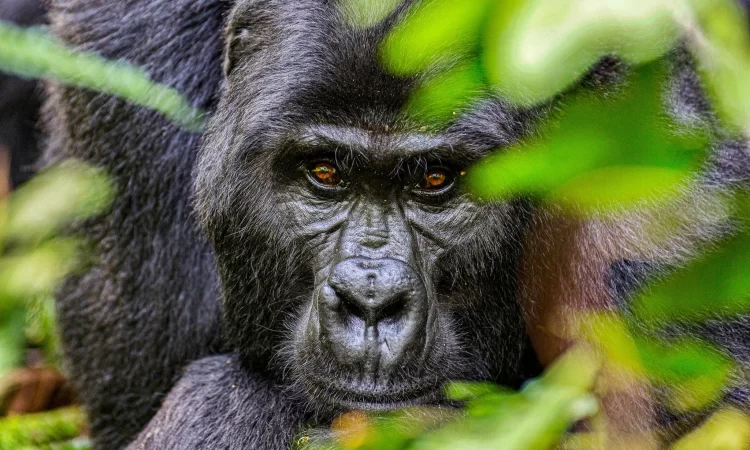
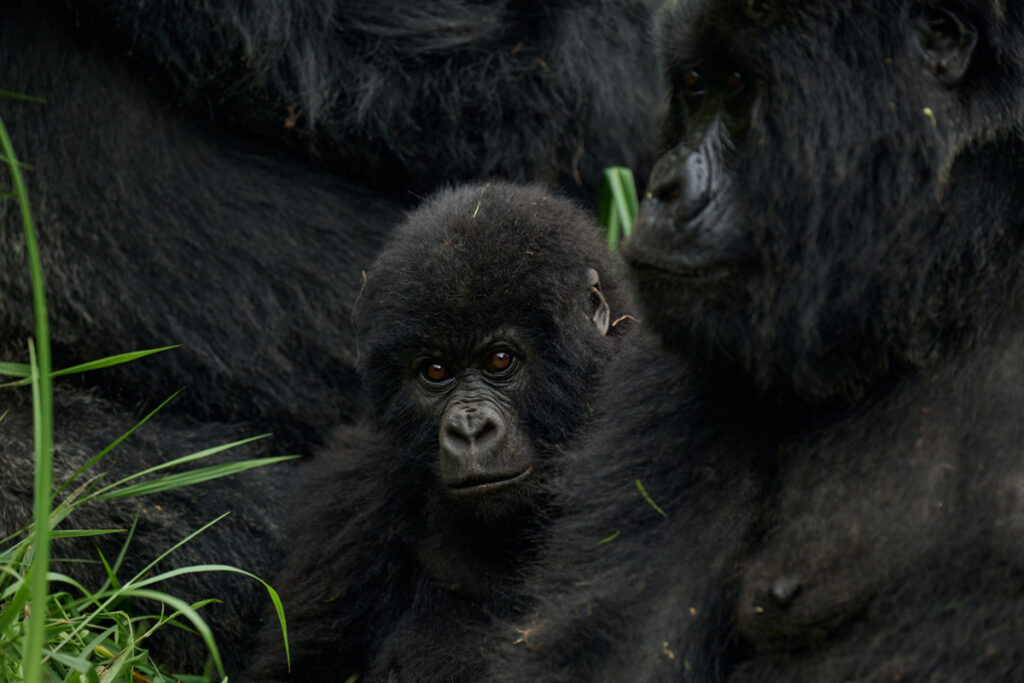
Gorilla Families in Virunga National Park
Virunga National Park holds a strange position in gorilla trekking conversations. It is Africa’s oldest national park, home to some of the most genetically important mountain gorilla families in the entire population, and priced at roughly half of what neighboring Rwanda charges for what is, on paper, a similar experience.
It is also in eastern DR Congo, a region that has experienced real periods of instability, which means the honest answer to “Should I trek gorillas in Virunga?” is more nuanced than a simple yes or no.
This guide covers what makes Virunga’s gorilla families genuinely distinctive, which groups you might visit, what current access and safety considerations look like, and how Virunga compares practically to trekking in Uganda or Rwanda for travelers weighing all three options.
Should You Trek Gorillas in Virunga?
Short answer: it depends entirely on current security conditions at the time of your planned travel, which must be assessed close to your travel date rather than based on older information.
We do not make a blanket recommendation either way on Virunga, because the honest answer changes based on the current situation in eastern DR Congo, which has seen periods of closure and reopening tied to regional conflict dynamics over the past several years.
What we do instead is check current government travel advisories, park authority updates, and on-the-ground operator reports before recommending Virunga to any specific guest for any specific travel date.
If conditions are stable at the time you are planning, Virunga offers a genuinely excellent and significantly more affordable gorilla trekking experience. If conditions are unsettled, we recommend Uganda or Rwanda instead without hesitation, since no wildlife encounter is worth an unacceptable safety risk.
Why Virunga’s Gorilla Families Matter So Much
Virunga National Park sits at the heart of the Virunga Massif, the volcanic mountain range shared by DR Congo, Rwanda, and Uganda, and it protects a significant share of the entire mountain gorilla population’s core habitat.
The park was established in 1925, making it the oldest protected area in Africa, and its gorilla conservation program predates the more internationally famous work later carried out in Rwanda by primatologist Dian Fossey, whose original research base at Kabara was actually located within what is now Virunga’s boundary before shifting into Rwandan territory.
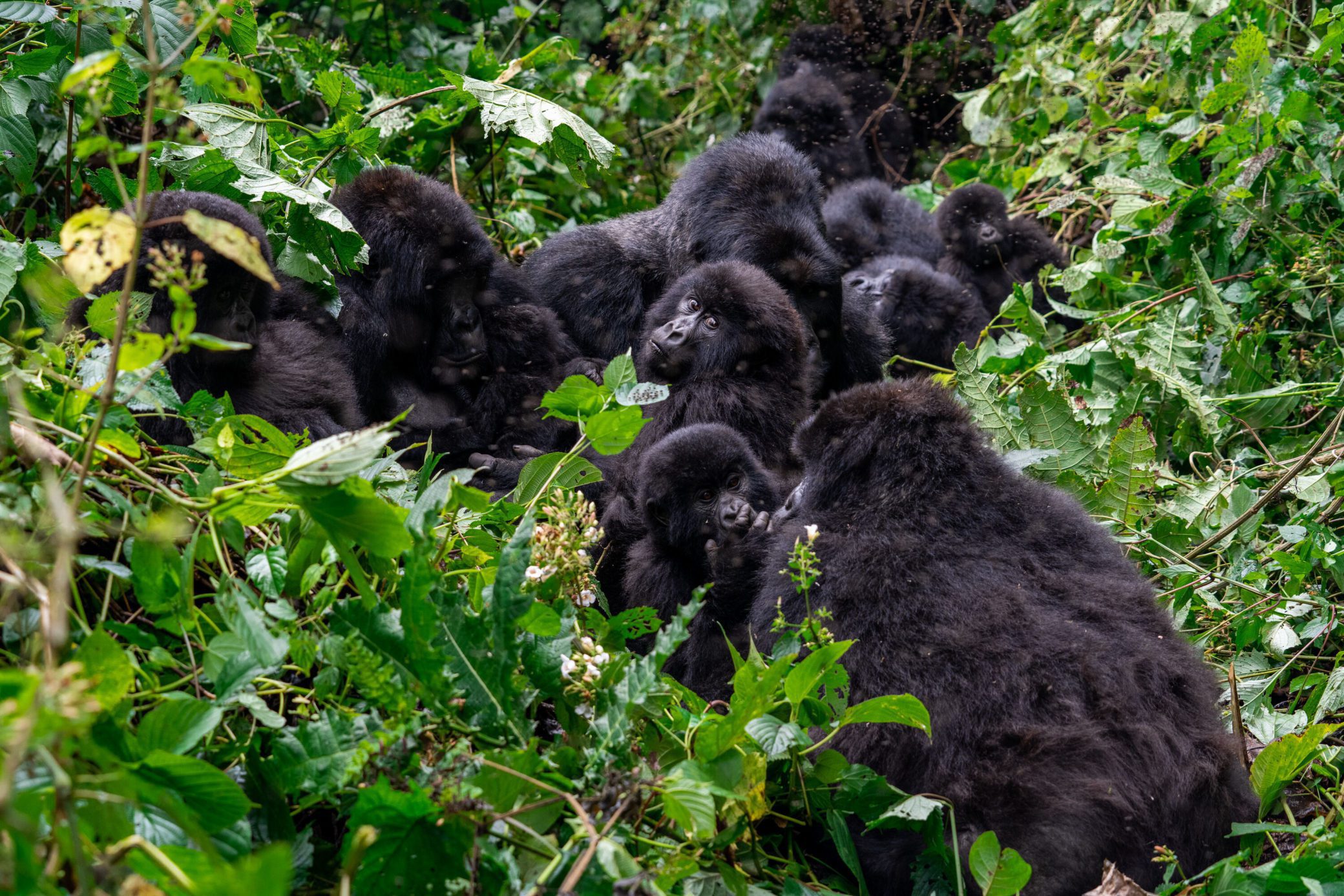
Genetically and behaviorally, gorilla families do not recognize national borders, and several groups have historically moved across the Congo-Rwanda-Uganda frontier depending on food availability and territorial pressure from neighboring groups.
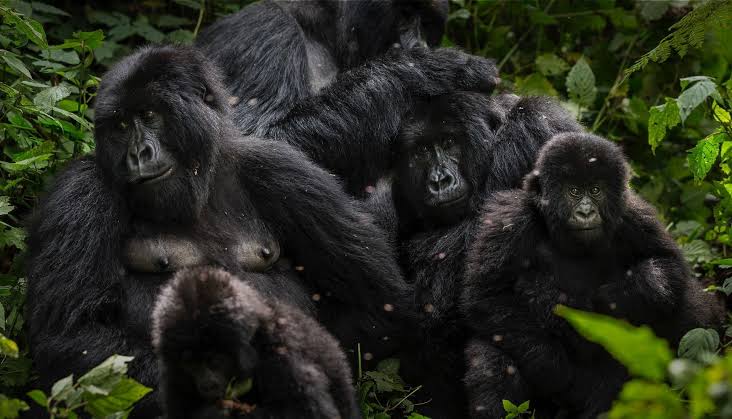
This means Virunga’s population is not a separate or lesser population from Rwanda’s; it is part of the same interconnected Virunga Massif population, monitored under a shared regional framework between the three countries’ park authorities.
Habituated Gorilla Families in Virunga
Virunga maintains several habituated gorilla families available for tourist trekking, alongside additional families reserved for ongoing research. Group composition changes over time as individuals are born, mature, transfer between groups, or occasionally die, so any specific family list should be treated as a snapshot rather than a permanent roster.
| Typical Group Profile | What Distinguishes It |
| Larger multi-silverback families | Some Virunga groups have unusually large numbers of adult silverbacks compared with typical single-silverback structures seen elsewhere, offering a different social dynamic to observe. |
| Groups near the Bukima trailhead | The most commonly visited access point, with comparatively easier terrain than some Ugandan sectors |
| Groups with a longer habituation history | Some Virunga families have been monitored continuously since the 1970s and 1980s, among the longest-observed gorilla lineages anywhere. |
Where Virunga Sits Relative to Uganda and Rwanda Trekking
| Factor | Virunga (DR Congo) | Rwanda | Uganda |
| Permit price (approx) | $400 | $1,500 | $800 |
| Nearest access point | Goma | Kigali | Entebbe/Kisoro |
| Security consideration | Requires current advisory check | Generally stable | Generally stable |
| Terrain | Volcanic slopes, moderate difficulty | Volcanic slopes, moderate difficulty | Dense rainforest, variable difficulty |
| Additional draw | Nyiragongo volcano trek nearby | Golden monkey tracking | Chimpanzee trekking in Kibale |
The price difference is the most obvious factor drawing interest toward Virunga, but it should never be the only factor in the decision. We encourage guests to think of the permit savings as a genuine benefit that exists specifically because DR Congo has had to work harder to attract visitors given the security perception, not as evidence that the trekking experience itself is somehow lesser.
The Rangers Who Protect These Families
It is difficult to write honestly about Virunga without acknowledging the human cost behind its gorilla conservation program. Virunga’s rangers operate in one of the most dangerous conservation contexts in the world, and the park has lost more rangers to violence than any other protected area on the continent, a toll linked directly to the armed groups and instability that have periodically affected the wider region.
This context matters for two reasons when you are deciding whether to visit. First, it explains why security assessment has to be taken seriously rather than treated as routine travel caution.
Second, it means that a portion of your permit fee, when conditions allow trekking to proceed, goes directly toward supporting a ranger corps operating under genuinely difficult and often dangerous circumstances, which is worth understanding as part of the full picture rather than glossing over.
Despite this, Virunga’s conservation program has continued largely without interruption for decades, adapting its operational area and access points as needed, and the park’s gorilla population within its core protected zones has remained relatively stable, a testament to the rangers’ ongoing work even through difficult periods.
Where You Would Stay
Accommodation options around Virunga are more limited than around Bwindi or Volcanoes National Park, reflecting the smaller scale of current tourism infrastructure in the region.
- Mikeno Lodge: the park’s own flagship lodge near Bukima, offering comfortable en-suite cottages with proceeds supporting park operations directly.
- Bukima Tented Camp: a simpler, more affordable option closer to the main trekking trailhead.
- Goma-based hotels: used as a base for travelers arriving via Rwanda and crossing the border for day access to the park, generally the more common arrangement given current cross-border logistics.
Many itineraries base travelers in Kigali or Goma and arrange a day-trip-style crossing for the gorilla trek itself, rather than an extended in-park stay, which simplifies logistics and keeps a shorter overall footprint inside DR Congo if that is a preference.
When to Consider Virunga
Virunga’s gorilla sector has, in stable periods, operated on a similar dry-season pattern to its neighbors, with June to September and December to February offering firmer trekking conditions. However, park access has been suspended entirely during certain periods due to regional security concerns, most notably affecting operations in past years, so timing advice here is necessarily more conditional than for Uganda or Rwanda. We check the current park operational status as a first step for any Virunga inquiry before discussing season or timing at all.
Comparing group dynamics across the three countries is one of the more interesting reasons experienced primate trekkers return to visit multiple times. Because habituation approaches, terrain, and even diet vary slightly across the Virunga Massif’s different sectors, no two treks feel identical even when visiting genetically related families.
A guide who has worked across all three countries will often tell you that Congolese-side families, given the region’s steeper volcanic terrain in places, can present a more physically demanding but visually dramatic trekking backdrop than the gentler approach trails common around Rwanda’s Kinigi sector.
What Else Virunga Offers Beyond Gorilla Trekking
Part of what makes Virunga appealing to experienced African travelers, beyond the gorilla permit price, is the additional activities available within the same park that do not exist in Uganda’s or Rwanda’s gorilla trekking areas.
- Nyiragongo Volcano trek: an overnight hike to camp on the rim of one of the world’s largest active lava lakes, a genuinely rare experience unavailable at Uganda or Rwanda’s gorilla trekking parks.
- Golden monkey tracking: available within the same broader Virunga Massif ecosystem, similar to the golden monkey tracking offered in Rwanda.
- Mikeno Lodge and other park-run accommodation: proceeds support park operations directly, an appealing detail for conservation-minded travelers.
Who Virunga Genuinely Suits
| Traveller Type | Fit for Virunga | Reasoning |
| First-time gorilla trekker | Generally not recommended | Uganda or Rwanda offers a more established, predictable first experience. |
| Repeat gorilla trekking traveller | Strong fit, conditions permitting | A genuinely different family lineage and setting after already experiencing Uganda or Rwanda |
| Budget-focused, security-flexible traveler | Worth considering, conditions permitting | Significant permit savings for travelers comfortable monitoring the security situation themselves |
| Adventure traveler wanting the volcano hike | Strong fit, conditions permitting | Nyiragongo Volcano access is unique to Virunga among the three gorilla trekking countries. |
| Traveller wanting a single, simple, worry-free booking | Not recommended | Uganda and Rwanda offer more straightforward, consistently bookable experiences. |
Frequently Asked Questions
Is it currently safe to visit Virunga National Park?
This changes over time and must be checked against current advisories close to your travel date. We assess this individually for every guest inquiry rather than giving a fixed answer, since conditions in eastern DR Congo have shifted multiple times in recent years.
Why is Virunga’s permit so much cheaper than Rwanda’s?
Pricing reflects DR Congo’s park authority strategy to remain competitive and attract visitors despite the security perception affecting the region, rather than any difference in the quality of the gorilla trekking experience itself.
Are Virunga’s gorilla families related to Rwanda’s?
Yes, in a meaningful sense. The Virunga Massif’s gorilla population spans all three countries’ borders, and family groups have historically moved between Congolese, Rwandan, and Ugandan territory, making the overall population a shared regional one rather than three separate populations.
Can I combine a Virunga gorilla trek with the Nyiragongo Volcano hike?
Yes, and many experienced travellers do exactly this, since both activities operate from a similar base area within the park, though it does require additional days and a good level of fitness for the volcano portion specifically.
What happens to my booking if Virunga closes before my trip?
This depends on your operator’s specific policy and the park authority’s own rules at the time. We always discuss contingency plans directly with guests before confirming a Virunga booking, including realistic alternative options in Uganda or Rwanda.
How do I actually cross into Virunga if I am based in Rwanda?
Most itineraries route travellers to the Bunagana or Goma border crossing from the Rwandan side, with your operator handling the necessary permissions and paperwork in advance. This crossing process is another area where current conditions must be verified close to your travel date, since border operations can be affected by the same regional dynamics that affect park access.
Does Virunga offer a habituation experience like Rwanda’s?
Availability of extended habituation-style permits has varied over time depending on park programming and which families are actively in the habituation process. We confirm current offerings directly with park authorities for each specific inquiry.
Is Virunga’s trekking experience physically harder than Uganda’s or Rwanda’s?
It varies by specific trail and family location rather than being uniformly harder or easier. Some Virunga approach routes involve steeper volcanic terrain, while others are comparable to the moderate trails common in Rwanda’s Kinigi sector. Your guide will brief you on the specific day’s difficulty based on where the assigned family was last located.
Getting Started
Virunga National Park protects some of the most historically significant gorilla families in the entire mountain gorilla population, at a genuinely lower cost than its regional neighbours, and for travellers visiting during a stable period, it delivers an outstanding trekking experience with the added bonus of activities like the Nyiragongo Volcano hike unavailable elsewhere. The decision to book it should rest on current, verified security information rather than price alone or outdated assumptions.
For most first-time travellers to the region, we still steer the conversation toward Uganda or Rwanda simply because predictability matters when you are spending significant money and limited holiday time on a single bucket-list activity.
Virunga earns its place in the conversation for a specific kind of traveller: someone who has already trekked gorillas once, understands what the experience involves, and is comfortable weighing a genuinely lower price and a unique historical setting against a security picture that requires active monitoring rather than a one-time check months in advance.