Rwanda Photo Safari
This guide covers what Rwanda Photo Safari actually involves, the specific gear and settings gorilla trekking demands, the rules you need to know before you ever raise a camera near a habituated family, and how to structure a photography-focused Rwanda itinerary around Volcanoes National Park, Nyungwe Forest, and Akagera.
While Kenya and Tanzania’s open plains dominate wildlife photography portfolios, Rwanda offers something genuinely different: dense forest primate photography that demands an entirely different technical approach, alongside a genuinely underrated savannah park in Akagera that delivers strong Big Five photography without Maasai Mara-level vehicle crowds. Photographers who arrive expecting a smaller-scale version of a Kenya trip often leave with the images they are proudest of from the entire journey.
Should You Plan a Dedicated Photo Safari to Rwanda?
Short answer: yes, particularly if primate photography interests you specifically, since gorilla and golden monkey photography in Rwanda offers a genuinely different technical challenge and reward than anything available on the classic savannah circuit.
A standard Rwanda gorilla trekking trip already puts you in a strong photographic position, but a dedicated photo safari approach changes several practical decisions: which sector you trek in, how you pack your camera bag for a physically demanding forest hike, and how you sequence your days to catch Akagera’s best early morning and late afternoon light.
Treating photography as a planning priority from the start, rather than an afterthought layered onto a standard itinerary, meaningfully improves your results.
Why Rwanda Rewards a Different Photographic Approach
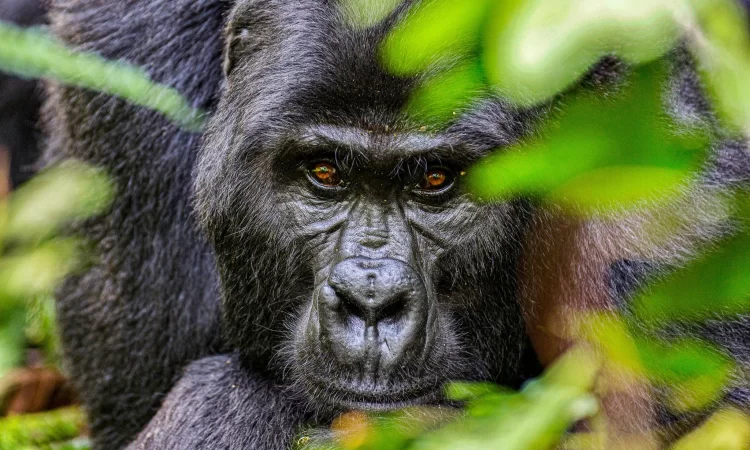
Forest photography and savannah photography are different disciplines, and Rwanda’s gorilla trekking experience sits firmly in the forest category: low light filtering through dense canopy, close subject distances, often under ten metres, and constantly shifting backgrounds as both you and the gorillas move through vegetation.
This is a considerably more technically demanding environment than a wide-open Serengeti plain, where consistent light and long, clear sightlines make composition more forgiving. Photographers who have only ever shot savannah wildlife sometimes need a session or two simply adjusting to how differently light and framing behave once you are inside dense forest cover.
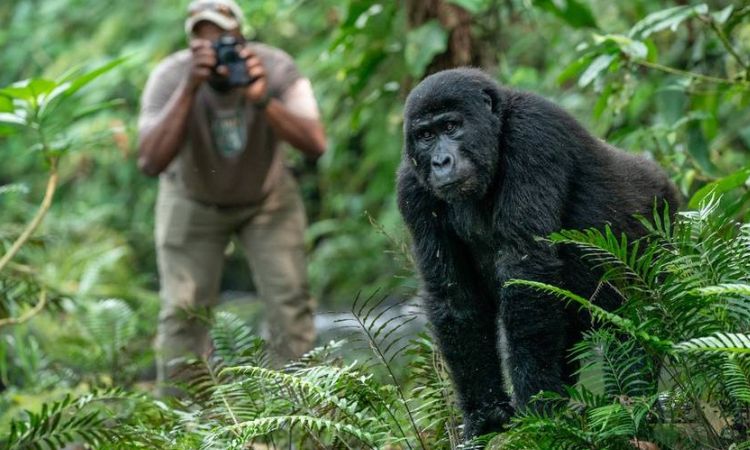
Practical implication: if your photography experience is built entirely around savannah game drives, gorilla trekking will ask more of your technical skill and gear flexibility than you might expect.
Where Rwanda’s Best Photo Opportunities Are
| Location | Photographic Subject | What Makes It Distinctive |
| Volcanoes National Park | Mountain gorillas, golden monkeys | Close-range primate portraits in dense forest, genuinely rare anywhere else |
| Akagera National Park | Big Five, plus rare species like the shoebill stork | Open savannah and wetland photography with considerably lower vehicle density than Kenya’s Maasai Mara |
| Nyungwe Forest National Park | Chimpanzees, colobus monkeys, birdlife, canopy walkway views | Rainforest photography and a rare elevated canopy vantage point |
| Lake Kivu | Landscape and cultural photography | Scenic water and hillside compositions, fishing boat traditions |
Photographing Gorillas: Rules and Realities
Before discussing gear, it is worth being direct about the rules that shape every gorilla photography session, since these are non-negotiable regardless of your equipment or experience level.
- No flash photography, ever. This is strictly enforced across Uganda, Rwanda, and DR Congo, since sudden bright light can startle or distress gorillas. Plan your entire approach around available light.
- A minimum viewing distance is generally enforced, though gorillas themselves sometimes approach visitors closer of their own accord, at which point rangers may ask you to step back rather than continue shooting at close range.
- You have exactly one hour with the family. There is no reshoot, no second visit that day, and no flexibility on this time limit, which puts real pressure on efficient, decisive shooting rather than extensive experimentation.
- Forest light is unpredictable and often low. Deep canopy shade punctuated by occasional bright shafts of light creates a genuinely challenging dynamic range to manage.
Gear Recommendations for Gorilla and Forest Photography
| Gear | Recommendation | Why |
| Lens | A fast zoom in the 70-200mm range, ideally f/2.8 | Balances reach with the wider aperture needed for low forest light without flash |
| Camera body | One capable of clean high-ISO performance (ISO 3200+) | Forest light frequently requires pushing ISO considerably higher than savannah conditions |
| Camera protection | A rain cover and lens cloth | Bwindi and Rwanda’s forest sectors are genuinely humid and prone to sudden light rain |
| Support | Skip the tripod; consider a monopod only if comfortable managing it while trekking | Full tripods are impractical on narrow forest trails and during a moving encounter |
| Backup gear | A second, lighter body or your phone as a backup | The one-hour window leaves no time to troubleshoot a primary camera failure |
Photographing Akagera:
Akagera National Park, in Rwanda’s east, offers a genuinely different photographic environment: open savannah, wetlands, and lake systems supporting the full Big Five alongside significant birdlife, including the rare and visually striking shoebill stork in certain wetland areas.
Unlike Volcanoes National Park’s forest constraints, Akagera allows standard savannah photography technique, longer telephoto lenses, vehicle-mounted bean bags, and the golden hour light quality familiar from Kenya or Tanzania photography. The park’s boat safari option along the Akagera and Kagera river systems also opens up a genuinely different vantage point for photographing hippos, crocodiles, and waterbirds at close range from water level.
Practical implication: pack differently for Akagera than for your gorilla trekking days; this is where your longer lenses and more traditional safari photography setup genuinely earn their place in your luggage.
Photographing Golden Monkeys
Golden monkeys, found only in the Virunga Massif’s bamboo forest zones, are a underrated photographic subject compared with the attention gorillas receive, and they present their own distinct challenge: considerably faster, more active movement through bamboo stands than gorillas’ generally calm, ground-based behaviour.
Their striking orange-gold coat colouring photographs beautifully against the green bamboo backdrop, but capturing sharp images requires a faster shutter speed and quicker autofocus response than gorilla photography typically demands. Continuous autofocus tracking modes, if your camera offers them, are considerably more useful here than for the slower-moving gorilla family sightings.
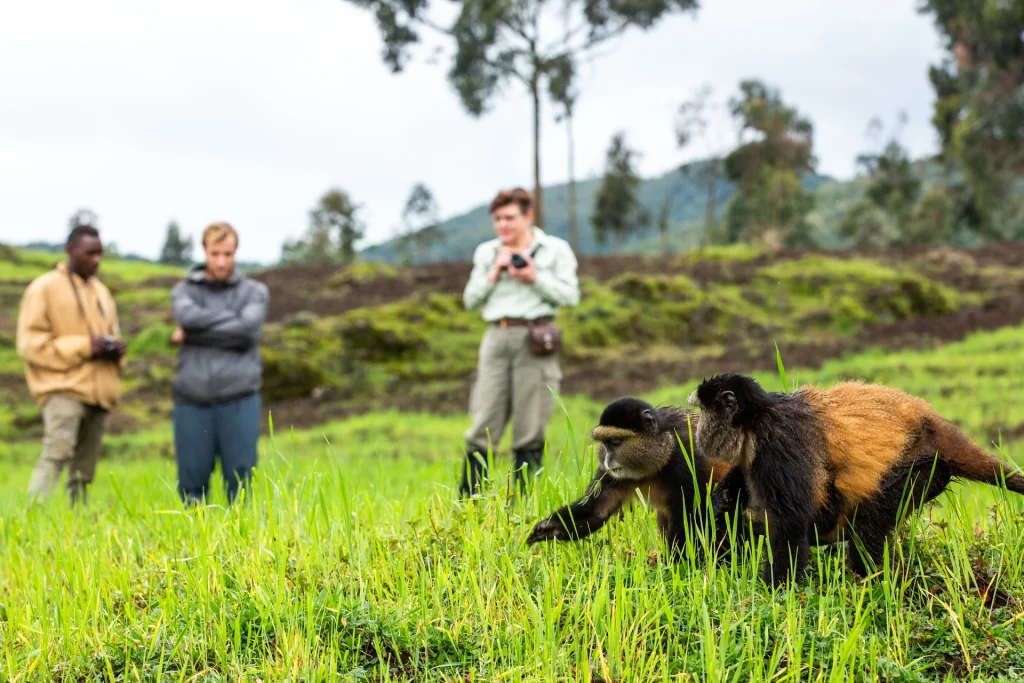
Practical implication: treat golden monkey tracking as a genuinely different photographic exercise from gorilla trekking, prioritising faster shutter speeds over the wider aperture, low-light approach that works for gorillas.
Field Workflow: Managing Images During a Multi-Stop Trip
A Rwanda photography trip moving between Volcanoes National Park, Akagera, and potentially Nyungwe generates a genuinely large volume of images across very different shooting conditions, and a simple field workflow habit saves considerable frustration later.
Backing up memory cards nightly to a laptop or portable storage device, formatting cards only after confirming a successful backup, and briefly reviewing your gorilla trekking images the same evening while the specific conditions are still fresh in memory all make a meaningful difference to your final edit quality once you are home.
Reviewing images the same night also gives you a genuine chance to adjust your approach for a second gorilla trek, if you have booked one, rather than only discovering a settings mistake after returning home.
Charging infrastructure varies considerably between Rwanda’s forest lodges and its more established savannah camps, so carrying a portable power bank and confirming your lodge’s charging facilities in advance avoids an unwelcome surprise on the one day you most need full batteries.
Who a Rwanda Photo Safari Suits
| Traveller Type | Fit | Reasoning |
| Experienced wildlife photographers wanting a new subject | Strong fit | Forest primate photography offers a genuinely different technical challenge from familiar savannah work |
| Photographers who have already done Kenya or Tanzania | Strong fit | Akagera and gorilla trekking together deliver meaningful variety beyond a repeat savannah trip |
| Beginners still learning camera fundamentals | Moderate fit | Gorilla trekking’s demanding low-light, one-hour-window conditions are unforgiving for photographers still building technical confidence |
| Casual travellers wanting a few good phone photos | Good fit for enjoyment, less so for serious photography goals | Modern phone cameras handle Akagera’s savannah light well, though gorilla forest conditions remain challenging on any device |
| Birders and specialist wildlife photographers | Strong fit, especially for Akagera and Nyungwe | Access to species like the shoebill stork and a wide range of forest and wetland birdlife |
What to Pack for a Rwanda Photography Trip
- Dry bags or waterproof camera covers for both the forest sectors and any boat-based photography on Lake Kivu or in Akagera’s wetlands.
- A comfortable, well-fitted camera harness or strap system to keep your hands free while navigating uneven forest terrain.
- A lightweight cleaning kit for lenses, since forest humidity and dust on savannah drives both affect image clarity if left unaddressed.
- Extra batteries for cold mornings. Battery performance drops in the cooler temperatures common at Volcanoes National Park’s higher altitude, particularly before sunrise.
- A dedicated bag for wildlife-safe storage of snacks and scent-neutral items, since food odours can occasionally attract unwanted attention from primates during a trek.
When to Photograph Rwanda for the Best Light and Conditions
| Location | Best Months | Why |
| Volcanoes National Park | June to September, December to February | Drier conditions mean less rain interruption during your one-hour window, though forest light remains challenging year-round |
| Akagera National Park | June to September, December to February | Drier season concentrates wildlife around remaining water sources, improving sighting frequency |
| Nyungwe Forest | June to October | Drier trails improve access to canopy walkway viewpoints and chimpanzee trekking routes |
Building a Rwanda Photography Itinerary
- Days 1 to 2: Arrive Kigali, road transfer to Volcanoes National Park, afternoon for gear preparation and a Lake Kivu or Twin Lakes scenic shoot if time allows.
- Day 3: Gorilla trekking, the centrepiece of the trip photographically.
- Day 4: Golden monkey tracking, a genuinely underrated photographic subject given the species’ striking colouring and more active, arboreal behaviour compared with gorillas.
- Days 5 to 6: Road transfer to Akagera for savannah and birdlife photography across two full days of game drives.
- Days 7 to 8: Optional extension to Nyungwe Forest for chimpanzee and canopy photography, or return to Kigali.
Planning Advice for Rwanda Photography
- Practice shooting in low light before your trip. Gorilla trekking gives you no opportunity to learn your camera’s high-ISO capabilities on the fly.
- Hire a porter regardless of your fitness level. A porter carrying your bag frees both hands for camera handling during the trek itself.
- Book a private vehicle for Akagera if photography is your priority. This allows you to dictate pace and positioning at sightings rather than sharing a shared-vehicle schedule.
- Bring more memory cards and batteries than you think you need. Charging facilities at forest lodges can be more limited than at savannah camps with reliable generator power.
- Consider the gorilla habituation experience permit if photography is your main goal. The extended four-hour window offers considerably more shooting opportunities than the standard one-hour trek, at a higher permit cost.
Frequently Asked Questions
Can I use a flash for gorilla photography if I am careful about it?
No, flash photography is strictly prohibited around gorillas in all three trekking countries, without exception, regardless of camera settings or claimed care.
What ISO settings should I expect to need for gorilla trekking?
Depending on canopy density and time of day, ISO 1600 to 6400 is common. A camera body with strong high-ISO noise performance is one of the most valuable pieces of equipment for this specific activity.
Is a professional photography permit required in Rwanda?
Standard personal photography requires no separate permit beyond your standard gorilla trekking or park entry permit. Commercial or professional shoots intended for publication or sale may require separate authorisation from Rwanda Development Board; confirm your specific use case in advance if this applies to you.
Is Akagera worth visiting purely for photography if I have already done a Kenya or Tanzania safari?
Yes, particularly for the lower vehicle density at sightings and the chance to photograph species like the shoebill stork that are considerably harder to find on the more heavily visited East African circuits.
How many gorilla treks should a serious photographer book?
Many photographers book two consecutive trekking days if budget allows, since weather, lighting, and gorilla behaviour vary significantly day to day, and a second attempt meaningfully improves your odds of capturing the images you are hoping for.
Should I shoot in RAW or JPEG for gorilla trekking specifically?
RAW is strongly recommended given how challenging forest lighting conditions are to expose correctly in-camera. The additional post-processing flexibility RAW provides is particularly valuable for recovering shadow detail from the deep canopy shade common during a trek.
Can I photograph the local community or Gorilla Guardians Village visit without restriction?
Photography is generally welcomed with permission, but always ask individuals directly before photographing them, and be guided by the community’s own comfort level, which may vary by specific activity or individual.
Preparing for Your Rwanda Photo Safari
Rwanda rewards photographers willing to treat gorilla trekking as a genuinely different technical discipline from standard savannah photography, rather than assuming the same gear and settings that work in the Maasai Mara will translate directly to Bwindi or Volcanoes National Park’s forest conditions. Pairing that primate-focused challenge with Akagera’s more traditional, lower-crowd savannah photography gives a well-rounded, genuinely distinctive photography trip.